
Skin Conditions Treated with Mohs Surgery
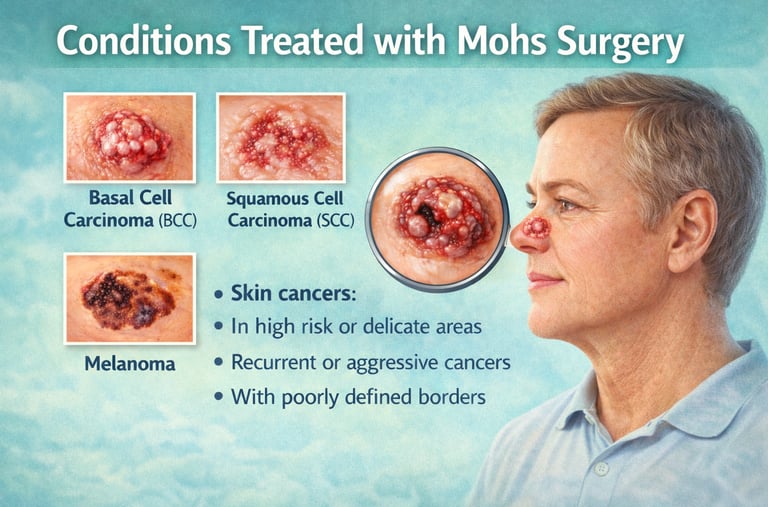
Mohs surgery is used to treat certain skin cancers and high-risk skin tumors that require precise removal. This page outlines the most common conditions treated with Mohs surgery and explains when this specialized approach may be recommended.
Mohs surgery is used to treat certain types of skin cancer that benefit from precise, layer-by-layer removal. It is most often recommended when a skin cancer has a higher risk of recurrence, has unclear borders, or is located in an area where preserving healthy skin is especially important. This approach allows the Mohs surgeon to carefully remove cancerous tissue while minimizing impact on surrounding skin.
Not all skin cancers require Mohs surgery. The decision to use this technique is based on the specific diagnosis, tumor characteristics, and established dermatologic guidelines. The sections below outline the most common conditions treated with Mohs surgery and why this method may be chosen for certain skin cancers.
Skin Conditions Treated with Mohs Surgery
Mohs surgery is primarily used to treat specific types of skin cancer that require careful margin control and tissue preservation. It is a well-established form of dermatologic surgery for cancers that are more likely to recur, grow aggressively, or develop in areas where healthy skin should be spared whenever possible.
What Types of Conditions Qualify for Mohs Surgery
Mohs surgery is most commonly used to treat:
Basal cell carcinoma, the most common form of skin cancer
Squamous cell carcinoma, which may grow more deeply or spread if not treated
Skin cancers with poorly defined borders
Recurrent skin cancers that have returned after prior treatment
In some cases, Mohs surgery may also be considered for less common or rare skin cancers, depending on their behavior and location. Your dermatologist determines whether Mohs surgery is appropriate based on established medical criteria.
When Mohs Surgery Is Recommended
Mohs surgery is often recommended when a skin cancer:
Is located on the face, ears, scalp, hands, feet, or genitals
Has recurred after previous treatment
Has aggressive or unusual growth patterns
Has indistinct edges that make complete removal more challenging
By evaluating the cancer type, size, and location, a Mohs surgeon can determine whether this precise surgical approach is the most appropriate treatment option.
Basal Cell Carcinoma
Basal cell carcinoma is the most common type of skin cancer. It typically grows slowly and often develops in areas that receive frequent sun exposure. While it rarely spreads to other parts of the body, basal cell carcinoma can grow deeper over time and damage surrounding skin if not treated.
Why Mohs Surgery Is Effective for Basal Cell Carcinoma
Mohs surgery is often used to treat basal cell carcinoma because it allows for precise removal of cancerous tissue. By examining each layer of skin during the procedure, the Mohs surgeon can confirm that cancer cells have been fully removed before the surgery is completed.
This approach is especially helpful for basal cell carcinoma that:
Has unclear or irregular borders
Has returned after previous treatment
Is located in areas where preserving healthy skin is important
Common Locations Treated
Basal cell carcinoma most often appears on sun-exposed areas of the body. Mohs surgery is commonly used when these cancers occur on the:
Nose
Eyelids
Ears
Lips
Cheeks and forehead
Treating basal cell carcinoma in these areas requires careful planning to support both effective cancer removal and proper healing.
Squamous Cell Carcinoma
Squamous cell carcinoma is the second most common type of skin cancer. It often develops on areas of the skin that have had long-term sun exposure and may grow more quickly than basal cell carcinoma. If left untreated, some squamous cell carcinomas can grow deeper into the skin and, in certain cases, spread to nearby tissue.
Why Mohs Surgery Is Effective for Squamous Cell Carcinoma
Mohs surgery is frequently recommended for squamous cell carcinoma when precise margin control is important. The step-by-step removal process allows the surgeon to identify and remove cancer cells while preserving as much healthy tissue as possible. This careful approach helps reduce the risk of recurrence in higher-risk cases.
Mohs surgery may be particularly useful for squamous cell carcinoma that:
Has indistinct borders
Has recurred after prior treatment
Is located in sensitive or high-risk areas
High-Risk Squamous Cell Features
Certain characteristics can make squamous cell carcinoma higher risk and more likely to require Mohs surgery. These features are based on established dermatologic guidelines.
High-risk features may include:
Larger tumor size
Poorly defined edges
Rapid growth
Location on the face, ears, lips, scalp, or hands
Occurrence in areas of previous radiation or chronic injury
When these features are present, Mohs surgery allows for thorough evaluation of the cancer while supporting careful treatment planning and follow-up.
Recurrent Skin Cancer
Recurrent skin cancer refers to a skin cancer that has returned after previous treatment. This can happen when cancer cells remain beneath the skin surface or extend beyond what was visible during the original procedure. Recurrent tumors often require a more precise treatment approach.
Skin Cancers That Have Returned After Prior Treatment
Skin cancers may recur after treatments such as standard surgical excision, freezing, or topical therapies. Recurrent tumors can be more difficult to treat because they may have irregular growth patterns or extend deeper into the skin than the original lesion.
Common concerns with recurrent skin cancer include:
Scar tissue that makes tumor borders harder to define
Cancer growth beneath the surface of the skin
Increased risk of further recurrence
Why Mohs Is Preferred for Recurrent Tumors
Mohs surgery is often preferred for recurrent skin cancers because it allows the surgeon to examine 100% of the tumor margins during the procedure. This level of precision helps identify cancer cells that may be hidden within scar tissue or along irregular pathways.
By removing cancer in thin layers and confirming clear margins before reconstruction, Mohs surgery provides a thorough and controlled approach for treating recurrent tumors while preserving healthy surrounding skin.
Aggressive or High-Risk Skin Cancers
Some skin cancers are considered aggressive or high risk based on how they grow, where they are located, or how they appear under the microscope. These tumors may be more likely to recur or cause local tissue damage if not treated carefully. Mohs surgery is often recommended in these situations because of its precise, margin-controlled approach.
Tumors with Ill-Defined Borders
Skin cancers with ill-defined borders do not have clear edges that can be easily seen or felt. This makes complete removal more challenging with standard surgical methods. Cancer cells may extend beyond the visible lesion into surrounding skin.
Mohs surgery allows the surgeon to:
Track the exact location of remaining cancer cells
Remove only tissue affected by cancer
Confirm clear margins before reconstruction
This approach is especially helpful when tumor boundaries are difficult to determine.
Rapidly Growing or Large Tumors
Tumors that grow quickly or reach a larger size may require more careful treatment planning. These cancers can involve deeper layers of skin or nearby structures, increasing the importance of thorough removal.
Mohs surgery provides a controlled, step-by-step method that helps address larger or faster-growing tumors while preserving as much healthy tissue as possible. This level of precision supports effective treatment and careful long-term monitoring.
Skin Cancer in Sensitive or High-Function Areas
Skin cancers that develop in sensitive or high-function areas require special consideration during treatment. These regions are involved in daily activities such as seeing, speaking, eating, and grasping, and they are often highly visible. Mohs surgery is commonly used in these areas because it allows for precise cancer removal while preserving important structures.
Face, Nose, Lips, Ears & Eyelids
The face is the most common location for skin cancers treated with Mohs surgery. Areas such as the nose, lips, ears, and eyelids have limited extra skin and contain delicate structures. Even small tumors in these locations may require careful planning.
Mohs surgery helps by:
Removing cancer while sparing healthy tissue
Preserving facial movement and function
Supporting reconstruction that blends with natural contours
Hands, Feet & Genital Areas
Skin cancer can also develop on the hands, feet, and genital areas, where function and sensation are especially important. These areas often have tight skin and limited flexibility, making precise removal essential.
Mohs surgery allows surgeons to treat cancer in these locations with a focus on maintaining strength, movement, and comfort while minimizing disruption to surrounding tissue.
When Mohs Surgery May Not Be Necessary
Mohs surgery is a highly effective treatment for certain skin cancers, but it is not required for every diagnosis. In some situations, other treatment options may be appropriate based on the type, size, location, and risk level of the tumor. Your dermatologist evaluates these factors using established medical guidelines to recommend the most suitable approach.
Low-Risk Tumors
Low-risk skin cancers are typically small, slow-growing, and have well-defined borders. They are often located in areas where preserving surrounding tissue is less critical. These tumors may be effectively treated with less complex methods.
Features that may suggest a tumor is low risk include:
Small size
Clear, well-defined edges
Location on areas such as the trunk or extremities
No history of recurrence
Alternative Treatment Options
When Mohs surgery is not necessary, other treatment options may be considered. These depend on the specific diagnosis and clinical findings.
Alternative treatments may include:
Standard surgical excision
Curettage and electrodesiccation
Topical medications for certain early cancers
Radiation therapy in select cases
Your dermatologist will explain why a particular treatment is recommended and how it aligns with your diagnosis and overall skin health.
How Your Dermatologist Determines the Best Treatment
Choosing the most appropriate treatment for skin cancer involves careful evaluation and medical judgment. Dermatologists follow established guidelines and consider multiple factors to determine whether Mohs surgery or another treatment option is best. The goal is to treat the cancer effectively while supporting healing and long-term skin health.
Biopsy Results & Tumor Characteristics
A skin biopsy provides important information about the type of skin cancer and how it behaves. Pathology results help identify whether the cancer is basal cell carcinoma, squamous cell carcinoma, or another type, as well as features that may increase risk.
Your dermatologist reviews:
The cancer type and growth pattern
Tumor size and depth
Border clarity and location
Any high-risk features noted on biopsy
These details guide treatment recommendations and help determine whether Mohs surgery is appropriate.
Individualized Treatment Planning
While medical guidelines provide a framework, treatment planning is individualized for each patient. Your dermatologist also considers overall health, previous skin cancer history, and how the treatment area is expected to heal.
By combining biopsy findings with clinical examination and patient-specific factors, your care team can recommend a treatment plan that is both appropriate and carefully tailored, while remaining focused on safety and effective cancer removal.
Frequently Asked Questions About Conditions Treated with Mohs Surgery
Patients often have questions about which skin cancers are treated with Mohs surgery and why this technique may be recommended. The answers below address common concerns and provide general information to help patients better understand their treatment options.
Common Patient Questions
What types of skin cancer are most often treated with Mohs surgery?
Mohs surgery is most commonly used to treat basal cell carcinoma and squamous cell carcinoma. It may also be recommended for recurrent or high-risk skin cancers, depending on their characteristics and location.
Is Mohs surgery used for melanoma?
Mohs surgery may be used in select cases of certain early or specialized types of melanoma, but it is not appropriate for all melanoma diagnoses. Your dermatologist determines the most appropriate treatment based on biopsy results and established guidelines.
Does every facial skin cancer require Mohs surgery?
No. While many facial skin cancers are treated with Mohs surgery, some low-risk tumors may be treated effectively with other methods. Treatment recommendations are based on tumor risk, size, and location.
Why is Mohs surgery recommended for high-risk or recurrent skin cancers?
Mohs surgery allows for detailed examination of the tumor margins during the procedure. This helps ensure thorough cancer removal while preserving as much healthy tissue as possible, which is especially important for high-risk or recurrent tumors.
Can my dermatologist explain why Mohs surgery is or is not recommended for me?
Yes. Your dermatologist will review your diagnosis, biopsy results, and treatment options with you and explain the reasoning behind the recommended approach.


Request a Mohs Consultation
Copyright © 2026 | Savannah Mohs Surgery | All Rights Reserved.
Privacy Policy | Terms and Conditions | Accessibility
Monday: 8:00am - 5:00pm
Tuesday: 8:00am - 5:00pm
Wednesday: 8:00am - 5:00pm
Thursday: 8:00am - 5:00pm
Friday: 8:00am - 5:00pm
Office Hours
Learn More
Reach Out
Resources
Address
Request Consultation
Call Now
(704) 858-6585
Savannah Mohs Surgery
Serving Savannah, GA and Surrounding areas.

