
Pain Management and Comfort During Mohs Surgery
Patient comfort is an important part of Mohs surgery. This page explains how pain is managed during and after the procedure, what patients typically experience, and how discomfort is addressed throughout recovery.
It is normal to feel concerned about pain or discomfort when you are preparing for Mohs surgery. Many patients want to know what the experience will feel like and how comfort is managed during skin cancer removal. Understanding what to expect can help reduce anxiety and make the process feel more manageable.
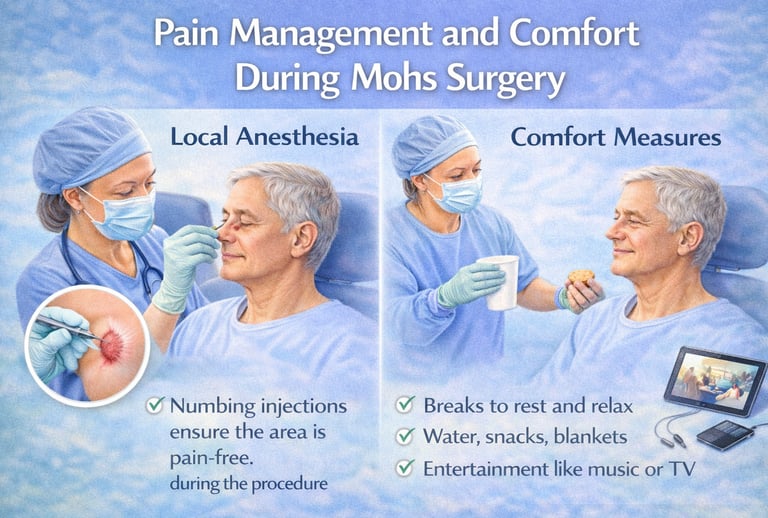
Mohs surgery is performed using local anesthesia, which numbs the treatment area while allowing you to remain awake and comfortable. Dermatologic surgery teams are trained to monitor pain closely and adjust care as needed throughout the procedure. Most patients are surprised by how well discomfort is controlled during Mohs surgery and appreciate the calm, supportive environment in which it is performed.
Is Mohs Surgery Painful?
Concerns about pain are one of the most common questions patients have before Mohs surgery. Because the procedure is used for skin cancer removal, it is natural to worry about discomfort during treatment and healing. Understanding how pain is managed and what others typically experience can provide reassurance.
Common Patient Concerns About Pain
Patients often worry about:
Feeling pain during the procedure
Discomfort from local anesthesia injections
Sensations during tissue removal
Pain after surgery once the numbing medication wears off
These concerns are understandable, especially for patients undergoing dermatologic surgery for the first time. A Mohs surgeon and care team are trained to address these issues and prioritize patient comfort throughout the process.
What Most Patients Actually Experience
Most patients report minimal pain during Mohs surgery due to the use of local anesthesia, which effectively numbs the treated area. You may feel brief pressure, vibration, or mild pulling sensations, but sharp pain is uncommon. If discomfort occurs at any point, additional numbing medication can be provided.
After the procedure, mild soreness or tenderness is common and usually manageable with simple comfort measures. Many patients find that Mohs surgery is less uncomfortable than they expected, particularly when compared to the anxiety they felt beforehand.
Local Anesthesia During Mohs Surgery
Local anesthesia plays a key role in keeping patients comfortable during Mohs surgery. It allows the Mohs surgeon to remove skin cancer while minimizing pain and avoiding the risks associated with general anesthesia. This approach is one reason Mohs surgery is commonly performed in an outpatient dermatologic surgery setting.
How Local Anesthesia Works
Local anesthesia temporarily blocks pain signals in the area being treated. Once injected, the medication numbs the skin and underlying tissue so skin cancer removal can be performed without pain. The numbing effect begins within minutes and lasts long enough for each stage of Mohs surgery to be completed.
Because Mohs surgery is done in stages, additional anesthesia may be given as needed to maintain comfort throughout the procedure. Patients remain awake and able to communicate, which helps the surgical team respond quickly if any discomfort arises.
What the Injection Feels Like
The anesthetic injection is often the most noticeable part of the procedure. Patients typically describe a brief stinging or burning sensation that lasts only a few seconds as the medication is administered. Once the area is numb, pain usually subsides quickly.
After numbing takes effect, most patients feel pressure or movement rather than pain during dermatologic surgery. The care team works carefully and at a measured pace to help ensure comfort at every step.
Comfort During the Mohs Procedure
Mohs surgery is performed in carefully planned stages, with patient comfort considered throughout each part of the process. Because the procedure can take several hours, the dermatologic surgery team focuses not only on effective skin cancer removal but also on creating a calm and supportive experience.
Staying Comfortable During Each Stage
During each stage of Mohs surgery, the treated area remains numb with local anesthesia. The Mohs surgeon checks regularly to ensure you are comfortable before proceeding. If you feel discomfort or unusual sensations, additional numbing medication can be provided.
Between stages, the surgical area is bandaged while the tissue is examined under a microscope. This step-by-step approach allows the surgeon to remove only the cancerous tissue while preserving healthy skin, all while maintaining patient comfort.
What You Can Do While Waiting
Waiting between stages is a normal part of Mohs surgery and can take anywhere from 30 minutes to over an hour. During this time, patients are typically seated in a comfortable waiting area.
You may choose to:
Read, listen to music, or use a mobile device
Relax or rest quietly
Have a light snack if permitted by your care team
The staff is available to check on you, answer questions, and make adjustments to help you remain comfortable throughout the day.
Managing Anxiety on Surgery Day
Feeling anxious on the day of Mohs surgery is common, especially for patients undergoing skin cancer removal for the first time. Worry about the procedure, timing, or outcomes can increase stress, even when pain is well controlled. Recognizing that these feelings are normal can help make the experience feel more manageable.
Dermatologic surgery teams are experienced in supporting patients emotionally as well as physically. Clear communication, a calm environment, and time for questions all play an important role in helping patients feel at ease during Mohs surgery.
Tips to Stay Relaxed
Simple steps can help reduce anxiety before and during your appointment:
Take slow, deep breaths to help calm your body
Listen to music or a podcast while waiting
Bring reading material or another quiet activity
Follow any pre-surgery instructions provided by your care team
Letting your Mohs surgeon or staff know if you feel anxious allows them to offer reassurance and adjust the pace of care when possible.
Bringing a Companion
Some patients feel more comfortable having a trusted friend or family member accompany them on surgery day. A companion can provide emotional support, help pass the time between stages, and assist with transportation if needed.
Your care team can let you know whether companions are allowed in waiting or recovery areas. Even when companions cannot be present throughout the procedure, many patients find reassurance in knowing someone is nearby.
Pain Control After Mohs Surgery
After Mohs surgery, some degree of discomfort is expected as the local anesthesia wears off. Post-surgery pain is usually mild to moderate and tends to improve over the first few days. Understanding what is typical can help you feel more prepared during the healing process.
Your Mohs surgeon will provide clear instructions for managing discomfort after skin cancer removal. Following these guidelines closely supports comfort and proper healing after dermatologic surgery.
Typical Post-Surgery Discomfort
Most patients experience:
Mild soreness or tenderness at the surgical site
Swelling or tightness in the surrounding skin
Occasional throbbing, especially within the first 24 to 48 hours
Discomfort is often influenced by the size and location of the surgical area. Areas with more movement or blood flow, such as the nose or lips, may feel more tender during early healing.
Over-the-Counter Pain Relief
For many patients, over-the-counter pain relievers are sufficient to manage post-surgery discomfort. These medications help reduce soreness and allow patients to rest more comfortably. Your care team will advise which options are appropriate and which medications to avoid.
Using recommended comfort measures, such as elevating the treated area or applying cold packs if instructed, can also help minimize swelling and pain.
When Prescription Medication Is Needed
Prescription pain medication is not commonly required after Mohs surgery. In some cases, it may be considered if the surgical site is larger or if discomfort is more significant than expected.
Your Mohs surgeon will evaluate your individual situation and provide guidance if additional pain control is appropriate. Any medication recommendations are made with safety and comfort in mind.
What Is Normal vs. Concerning Pain
As your surgical site heals after Mohs surgery, it is helpful to understand which sensations are expected and which may require medical attention. Most discomfort improves steadily over time, but knowing what is typical can provide reassurance during recovery.
Healing experiences vary depending on the size and location of the skin cancer removal, as well as individual factors. Your Mohs surgeon will review what to expect and when to contact the office with concerns.
Expected Sensations During Healing
Normal healing sensations after Mohs surgery may include:
Mild to moderate soreness that gradually improves
Tightness or pulling as the skin heals
Itching or tingling as nerves recover
Bruising or swelling that fades over several days
These sensations are usually temporary and part of the normal healing process following dermatologic surgery.
When Pain May Signal a Problem
Pain that worsens instead of improves may need to be evaluated. You should contact your care team if you notice:
Increasing pain after the first few days
Significant swelling, redness, or warmth around the surgical site
Persistent bleeding or drainage
Fever or signs of infection
Prompt communication with your Mohs surgeon allows potential issues to be addressed early and helps support proper healing.
Special Comfort Considerations
Every patient’s experience with Mohs surgery is unique. Certain factors, such as the location of the skin cancer or underlying medical conditions, may require additional attention to comfort. Mohs surgeons and dermatologic surgery teams are trained to adapt care to meet individual needs while maintaining safety and precision.
Discussing any concerns ahead of time helps the care team plan appropriately and create the most comfortable experience possible.
Sensitive Areas of the Face or Body
Mohs surgery is commonly used to treat skin cancers in delicate or highly visible areas, such as the nose, eyelids, lips, ears, hands, and scalp. These areas may be more sensitive due to nerve density or frequent movement.
Extra care is taken to:
Ensure thorough numbing before each stage
Monitor comfort closely throughout the procedure
Use careful techniques to protect surrounding healthy tissue
While tenderness in these areas can last longer during healing, pain is usually manageable with standard comfort measures.
Patients with Anxiety or Medical Conditions
Patients with anxiety, prior difficult medical experiences, or certain health conditions may need additional support during Mohs surgery. Sharing this information with your Mohs surgeon allows the team to adjust communication, pacing, and comfort strategies.
Medical conditions such as bleeding disorders or sensitivities to medications are also carefully considered. The goal is to provide safe, compassionate dermatologic surgery while minimizing both physical discomfort and emotional stress.
Frequently Asked Questions About Pain Management & Comfort
Patients often have practical questions about comfort and pain control before undergoing Mohs surgery. The answers below address some of the most common concerns and are intended to provide general information and reassurance.
Common Pain & Comfort Questions
Will I feel pain during Mohs surgery?
Most patients feel little to no pain during Mohs surgery because local anesthesia is used to numb the area. You may notice pressure or movement, but sharp pain is uncommon.
How long does numbness last after the procedure?
Numbness typically lasts several hours after skin cancer removal. Sensation gradually returns as the anesthesia wears off.
Is Mohs surgery more painful than other skin cancer treatments?
Many patients report that Mohs surgery is similar to or less uncomfortable than other dermatologic surgery procedures. The use of local anesthesia and careful technique helps manage discomfort effectively.
What if I feel pain during the procedure?
If you experience discomfort at any point, you can let the Mohs surgeon or staff know. Additional numbing medication can be given to improve comfort.
How painful is recovery after Mohs surgery?
Recovery discomfort is usually mild to moderate and improves over the first few days. Most patients manage pain with simple comfort measures and over-the-counter medication as recommended by their care team.


Request a Mohs Consultation
Copyright © 2026 | Savannah Mohs Surgery | All Rights Reserved.
Privacy Policy | Terms and Conditions | Accessibility
Monday: 8:00am - 5:00pm
Tuesday: 8:00am - 5:00pm
Wednesday: 8:00am - 5:00pm
Thursday: 8:00am - 5:00pm
Friday: 8:00am - 5:00pm
Office Hours
Learn More
Reach Out
Resources
Address
Request Consultation
Call Now
(704) 858-6585
Savannah Mohs Surgery
Serving Savannah, GA and Surrounding areas.

