
What to Expect on
Surgery Day
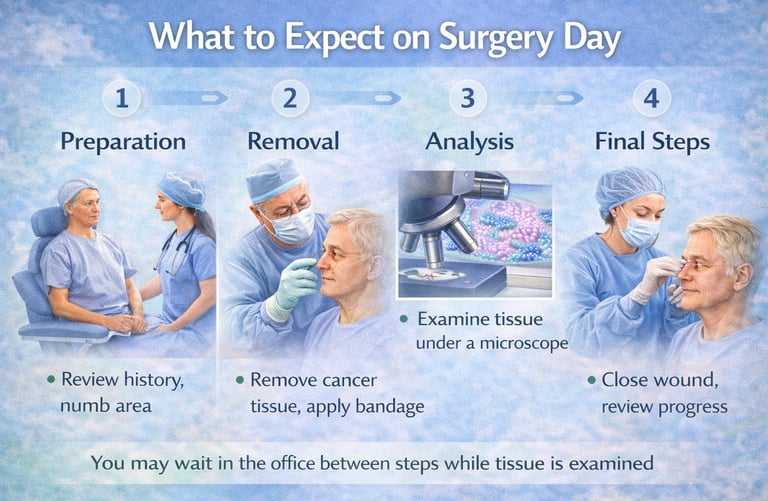
Knowing what to expect on the day of Mohs surgery can help patients feel more prepared and at ease. This page explains how the day typically unfolds, including arrival, treatment steps, waiting periods, and completion of care.
Knowing what to expect on the day of Mohs surgery can help ease anxiety and make the experience feel more manageable. Mohs surgery is carefully planned and performed in a controlled, outpatient setting, with a focus on comfort, safety, and clear communication throughout the day.
Because the procedure is done in stages, the timeline can vary from patient to patient. This page explains how the day typically unfolds, from arrival and preparation to tissue examination and wound repair, so you can feel informed and prepared as you move forward with skin cancer removal.
Preparing for Your Mohs Surgery Day
A small amount of preparation can help your Mohs surgery day go more smoothly. Your care team will provide specific instructions ahead of time, but understanding general expectations can help you feel more comfortable and prepared.
What to Do Before You Arrive
Before arriving for Mohs surgery, patients are typically advised to follow their usual morning routine unless told otherwise. This often includes eating breakfast and taking prescribed medications as directed. Clear communication with your dermatology office before the procedure helps ensure that any questions or concerns are addressed in advance.
What to Wear & Bring
Comfortable clothing is recommended on the day of surgery. Loose-fitting garments and layers can help accommodate bandages and waiting periods between stages. Patients may also wish to bring:
Reading materials or other quiet activities
A light snack or beverage, if permitted
A list of current medications
These items can help make waiting periods more comfortable while tissue is examined in the on-site lab.
Checking In on Surgery Day
The check-in process on the day of Mohs surgery is designed to be straightforward and supportive. From arrival through preparation, the care team works to ensure that patients feel informed and comfortable before the procedure begins.
Arrival & Registration
Upon arrival, patients check in at the front desk and complete any necessary paperwork. This may include confirming medical history, medications, and consent forms. Staff will review basic information and help guide you through the next steps of the visit.
Meeting Your Care Team
After check-in, you will meet members of your care team, which may include medical assistants, nurses, and your Mohs surgeon. The team will review the plan for the day, answer questions, and confirm the treatment area. This time allows for open communication and helps ensure that everyone is aligned before the procedure starts.
Before the Procedure Begins
Before Mohs surgery starts, several important steps take place to ensure accuracy and patient comfort. This preparation helps confirm that the procedure is performed safely and according to the planned approach.
Confirming the Treatment Site
The Mohs surgeon carefully confirms the exact location of the skin cancer before beginning. This may include reviewing biopsy information, examining the area, and discussing the site with the patient. Confirming the treatment site is an important safety step that helps ensure the correct area is treated.
Reviewing the Plan for the Day
The care team will review what to expect throughout the day, including the step-by-step nature of Mohs surgery and possible waiting periods between stages. Patients are encouraged to ask questions at this time. Clear communication helps set expectations and supports a calm, informed experience on surgery day.
During Mohs Surgery
Mohs surgery is performed in a series of carefully planned stages, with patient comfort and safety prioritized throughout the procedure. Patients remain awake and able to communicate with the care team at all times.
Local Anesthesia & Comfort
Local anesthesia is used to numb the treatment area before each stage of Mohs surgery. This helps minimize discomfort while allowing the patient to remain alert. Most patients feel pressure or movement but little to no pain during the procedure, and additional anesthetic can be provided if needed.
What Happens During Each Stage
During each stage, the Mohs surgeon removes a thin layer of tissue from the treatment site. The tissue is then processed and examined under a microscope in the on-site lab. While this analysis is taking place, patients rest in a waiting area. If cancer cells are found, another targeted stage is performed. This process continues until no cancer cells remain.
Waiting Between Stages
Waiting periods are a normal part of Mohs surgery and are necessary for accurate tissue analysis. Understanding what happens during this time can help set expectations and make the experience more comfortable.
What Happens While Tissue Is Examined
After each layer of tissue is removed, it is taken to the on-site laboratory for processing and microscopic examination. The Mohs surgeon carefully evaluates the entire surgical margin to check for remaining cancer cells. This process takes time, which is why there may be breaks between stages of the procedure.
How to Stay Comfortable While Waiting
While waiting, patients typically rest in a designated area. To stay comfortable, many patients choose to:
Read or listen to music
Bring a light snack or beverage, if permitted
Wear layers to adjust for room temperature
The care team is available during these periods to answer questions and provide updates as the process continues.
Waiting Between Stages
Waiting periods are a normal part of Mohs surgery and are necessary for accurate tissue analysis. Understanding what happens during this time can help set expectations and make the experience more comfortable.
What Happens While Tissue Is Examined
After each layer of tissue is removed, it is taken to the on-site laboratory for processing and microscopic examination. The Mohs surgeon carefully evaluates the entire surgical margin to check for remaining cancer cells. This process takes time, which is why there may be breaks between stages of the procedure.
Receiving Your Results
One of the advantages of Mohs surgery is that results are available the same day. This allows the Mohs surgeon to determine whether all cancer cells have been removed before moving forward with wound repair or reconstruction.
Same-Day Results Explained
After each stage of tissue removal, the Mohs surgeon examines the tissue under a microscope in the on-site lab. You will be informed whether cancer cells are still present or if the margins are clear. This real-time feedback guides the next step in the process and helps eliminate uncertainty about treatment progress.
When Cancer Removal Is Complete
Cancer removal is considered complete once microscopic examination shows clear margins, meaning no cancer cells remain at the edges of the removed tissue. At that point, no further stages are needed. The focus then shifts to wound care and healing, including discussion of repair or reconstruction options.
Wound Repair & Reconstruction
After Mohs surgery confirms that all cancer has been removed, attention turns to caring for the surgical site. The goal of wound repair and reconstruction is to promote proper healing while preserving function and appearance.
Discussing Repair Options
The Mohs surgeon will discuss appropriate repair options based on the size, depth, and location of the wound. Options may include allowing the area to heal naturally, closing the wound with stitches, or using specialized reconstructive techniques. The recommended approach is chosen to support healing and long-term skin health.
Same-Day Reconstruction
In many cases, wound repair or reconstruction is performed on the same day as cancer removal. Completing reconstruction immediately helps streamline care and allows healing to begin right away. Your Mohs surgeon will explain what to expect after repair and provide general guidance for post-procedure care.
Before You Leave the Office
Before leaving the office, the care team reviews important information to support safe recovery at home. This final step helps ensure that patients feel informed and prepared after Mohs surgery.
Post-Surgery Instructions
You will receive written and verbal instructions covering wound care, activity limitations, and general healing expectations. These instructions may include guidance on bandage care, managing mild discomfort, and recognizing signs that should be reported to the office. Clear instructions help support proper healing after dermatologic surgery.
Transportation & Going Home
Most patients are able to go home the same day after Mohs surgery. Depending on the location of the surgery or how you are feeling, arranging transportation in advance may be recommended. The care team will confirm when it is safe to leave and answer any final questions before you go home.
Common Surgery Day Questions
What’s Normal to Feel
It is normal to feel a mix of emotions on the day of Mohs surgery, including nervousness or uncertainty. Physically, most patients experience little discomfort during the procedure due to local anesthesia. Mild soreness, pressure, or tightness around the treated area may occur afterward and are typical parts of the healing process.
How Long You’ll Be Here
Because Mohs surgery is performed in stages, the total length of the visit can vary. Many patients spend several hours in the office, including waiting periods while tissue is examined in the on-site lab. Planning to be available for most of the day helps reduce stress and allows the procedure to proceed without rushing.
Frequently Asked Questions About Mohs Surgery Day
Surgery-Day FAQs
Can I eat before Mohs surgery?
In most cases, patients are encouraged to eat a normal breakfast unless instructed otherwise by their care team. Specific instructions will be provided before your appointment.
Can I drive myself home after the procedure?
Many patients are able to drive themselves home. However, depending on the location of the surgery or how you feel afterward, arranging transportation in advance may be recommended.
Should I bring someone with me?
You may bring a family member or friend for support, though they may need to wait in designated areas during the procedure. Your office can provide guidance on what to expect.
Why does Mohs surgery take so long?
The procedure includes waiting periods while tissue is processed and examined under a microscope. These steps are essential for confirming complete skin cancer removal and cannot be rushed.
Will I leave with a bandage?
Yes. After surgery and any reconstruction, the treated area will be bandaged. You will receive instructions on how to care for the site once you return home.
Request a Mohs Consultation


Copyright © 2026 | Savannah Mohs Surgery | All Rights Reserved.
Privacy Policy | Terms and Conditions | Accessibility
Monday: 8:00am - 5:00pm
Tuesday: 8:00am - 5:00pm
Wednesday: 8:00am - 5:00pm
Thursday: 8:00am - 5:00pm
Friday: 8:00am - 5:00pm
Office Hours
Learn More
Reach Out
Resources
Address
Request Consultation
Call Now
(704) 858-6585
Savannah Mohs Surgery
Serving Savannah, GA and Surrounding areas.

