
Aftercare & Recovery
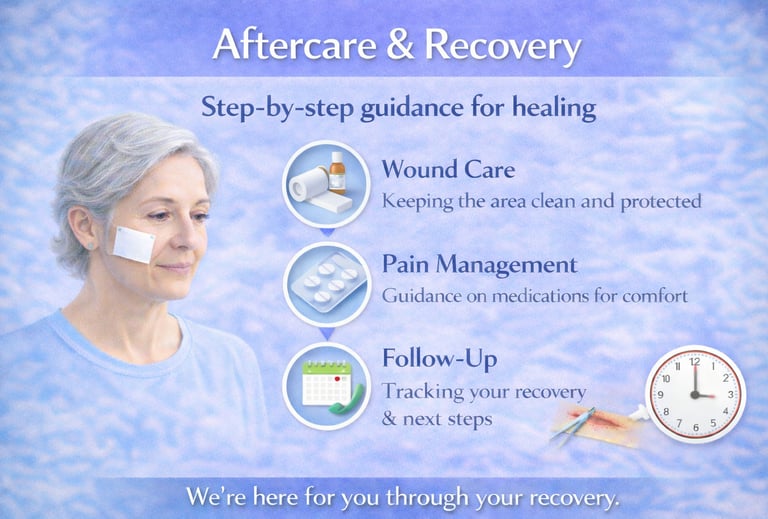
Clear aftercare and recovery guidance helps support healing after Mohs surgery. This page explains what to expect during recovery, how to care for the surgical site, and when follow-up visits are important for long-term skin health.
Proper aftercare is an important part of healing after Mohs surgery. While the procedure is highly precise and designed to remove skin cancer while preserving healthy tissue, your body still needs time and care to heal. Understanding what to expect during recovery can help you feel more comfortable, prepared, and confident in the days and weeks following treatment.
Most patients recover well with straightforward wound care and regular follow-up. Your Mohs surgeon and care team will provide clear, personalized instructions to support healing, reduce the risk of complications, and promote the best possible outcome. The information below offers a general overview of recovery after Mohs surgery and what many patients experience during the healing process.
Immediate Care After Mohs Surgery
The first hours after Mohs surgery are focused on protecting the surgical site and allowing your body to begin healing. Most patients experience mild discomfort, swelling, or tightness around the treated area, which is expected after dermatologic surgery. Your care team will review aftercare instructions before you leave and answer any immediate questions.
What to Expect Right After Surgery
After the procedure, the surgical site will be bandaged to protect the wound and minimize bleeding. It is common to feel numbness from local anesthesia for several hours, followed by mild soreness once the numbness wears off. Some redness or swelling near the treatment area is normal, especially if the surgery was performed on the face.
You may be advised to:
Keep the bandage clean and dry for a specified period
Avoid strenuous activity for the rest of the day
Use prescribed or recommended pain relief as directed
Going Home the Same Day
Mohs surgery is performed on an outpatient basis, meaning most patients go home the same day. You will not need a hospital stay, and recovery begins right away at home. Depending on the location of the surgery, you may be asked to arrange transportation, especially if the procedure involved the eye area or required more extensive reconstruction.
Resting, following wound care instructions, and monitoring the surgical site closely during the first 24 hours all play an important role in early healing. Your care team will let you know when to resume normal activities and when to contact the office with questions or concerns.
The First 24–48 Hours After Surgery
The first one to two days after Mohs surgery are an important part of the healing process. Most patients experience mild to moderate symptoms that improve steadily with proper wound care and rest.
Managing Bleeding
Some oozing or light bleeding from the surgical site is common during the first 24 hours. Applying firm, direct pressure with clean gauze for 15–20 minutes usually controls minor bleeding.
Patients are often advised to avoid strenuous activity, bending, or heavy lifting during this time, as these can increase blood flow and delay healing. Any bleeding that does not stop with sustained pressure should be reported to the surgical office.
Swelling & Bruising
Swelling and bruising are normal after skin cancer removal, especially when surgery is performed on the face or around the eyes. Swelling may increase during the first 24–48 hours before gradually improving.
Keeping the treated area elevated and using cold compresses as directed can help reduce swelling and bruising. These effects typically resolve over one to two weeks, depending on the treatment area.
Pain & Discomfort Control
Most patients report mild discomfort rather than significant pain after Mohs surgery. This discomfort is usually manageable with non-prescription pain relievers recommended by the surgical team.
Following post-operative instructions carefully helps promote comfort and supports proper healing during the early recovery period.
Wound Care Instructions
Proper wound care after Mohs surgery supports healing and helps reduce the risk of infection and scarring. Patients receive specific post-operative instructions based on their individual procedure, and following these guidelines is an important part of recovery.
Bandage Care & Dressing Changes
A bandage is typically placed over the surgical site immediately after the procedure. This dressing helps protect the area and absorb any drainage during the early healing phase.
Patients are usually instructed on when and how to change the bandage, often once daily or as directed. Clean hands and fresh supplies should always be used during dressing changes.
Cleaning the Surgical Site
The surgical area is typically cleaned gently using mild soap and water or another recommended solution. Cleaning helps remove dried blood or drainage and keeps the wound free of debris.
Patients should avoid scrubbing the area. Gentle cleansing as instructed helps protect healing tissue.
Keeping the Wound Moist
Keeping the wound slightly moist is an important part of proper healing. An ointment such as petroleum jelly or another recommended product is often applied to prevent scab formation.
Moist wound care can help reduce irritation and may support improved scar appearance over time.
Showering & Bathing Guidelines
Showering is often allowed within a specific time frame after surgery, depending on the treatment area and type of repair. The surgical team provides clear guidance on when it is safe to shower.
Patients are typically advised to avoid soaking the wound in baths, hot tubs, or swimming pools until healing has progressed and the area is cleared by the surgeon.
Activity Restrictions & Daily Life
After Mohs surgery, temporary activity restrictions help protect the surgical site and support proper healing. Most patients can return to many normal routines quickly, with a few short-term adjustments.
Physical Activity & Exercise Limits
Strenuous exercise, heavy lifting, and activities that raise blood pressure are usually limited for the first one to two weeks. These activities can increase swelling or cause bleeding at the surgical site.
Light walking and gentle daily activities are typically allowed unless otherwise directed. Patients receive individualized guidance based on the location and size of the surgical area.
Work & Driving After Mohs Surgery
Many patients are able to return to work within one to two days, depending on their job responsibilities and comfort level. Jobs that require physical exertion or prolonged bending may require additional time off.
Driving is often permitted once the effects of local anesthesia have worn off and the patient feels comfortable. If the surgical site affects vision or movement, temporary driving restrictions may be recommended.
Sleeping Position & Elevation
Sleeping with the head or treated area elevated can help reduce swelling during the first few nights after surgery. Extra pillows or a recliner may be helpful.
Patients are often advised to avoid sleeping on the side of the surgical site to prevent pressure and irritation while healing is underway.
Medications After Mohs Surgery
Medications after Mohs surgery are used to support comfort, healing, and infection prevention when needed. Patients receive individualized instructions based on their medical history and the specifics of their procedure.
Pain Medications
Most patients experience mild discomfort after Mohs surgery rather than significant pain. Non-prescription pain relievers are often sufficient and are commonly recommended by the surgical team.
Patients are advised to follow medication instructions carefully and avoid taking medications not approved by their provider, as some can increase bleeding risk.
Antibiotics
Antibiotics are not routinely required after Mohs surgery. In certain situations, such as larger repairs or surgeries in higher-risk areas, a short course of antibiotics may be prescribed.
When antibiotics are given, it is important to take them exactly as directed and complete the full course unless otherwise instructed by the healthcare provider.
Blood Thinners & Supplements
Some medications and supplements can increase the risk of bleeding after surgery. Patients are typically advised to inform their Mohs surgeon about all prescription medications, over-the-counter drugs, and supplements they take.
Decisions about blood thinners or supplements are made on an individual basis. Patients should not stop or change any medications unless specifically instructed by their prescribing physician or surgical team.
Signs of Infection or Complications
Most patients heal without problems after Mohs surgery. Knowing what to expect during normal healing—and which symptoms may signal a complication—can help ensure timely care if concerns arise.
Normal Healing vs. Warning Signs
Normal healing may include mild redness, swelling, tenderness, and clear or lightly blood-tinged drainage around the surgical site. These symptoms typically improve gradually over several days.
Warning signs may include increasing redness that spreads, worsening pain, warmth around the wound, thick yellow or green drainage, or a fever. Bleeding that does not stop with firm pressure is also a reason for concern.
When to Call the Office Immediately
Patients should contact the surgical office promptly if they experience:
Bleeding that continues after applying firm pressure for 20 minutes
Increasing pain, swelling, or redness after the first few days
Signs of infection such as pus, fever, or chills
Separation of wound edges or sudden changes in the surgical site
Early communication allows the care team to address concerns quickly and support safe healing.
Healing & Early Recovery Timeline
Healing after Mohs surgery happens gradually and varies based on the size and location of the surgical site, as well as the type of repair performed. Understanding the early recovery timeline can help patients feel more comfortable and prepared during the healing process.
What’s Normal During Healing
During the first few days, it is normal to notice mild swelling, bruising, redness, and tenderness around the surgical area. These symptoms typically peak within the first 48 hours and then slowly improve.
As healing continues, the area may feel tight or itchy, and the appearance of the wound will change over time. These are expected parts of the healing process and usually improve over several weeks.
When Stitches Are Removed
If stitches are used, they are typically removed within one to two weeks after surgery. The exact timing depends on the location of the surgical site and how the area is healing.
Areas with higher tension or movement may require stitches to stay in place slightly longer. The surgical team provides clear instructions and schedules follow-up visits to ensure proper healing.
Scar Care During Recovery
Proper scar care after Mohs surgery supports healthy healing and can help improve the long-term appearance of the treated area. Scar care recommendations may vary depending on the location and size of the surgical site.
Early Scar Care Recommendations
Once the wound has healed and stitches are removed, gentle scar care may begin as directed by the surgical team. This often includes keeping the area clean, moisturized, and protected from irritation.
Patients may be advised to gently massage the scar after initial healing to help soften the tissue. Any scar care products should be used only if recommended by the provider.
Sun Protection During Healing
Protecting the healing area from sun exposure is an important part of scar care. Sun exposure can darken scars and make them more noticeable over time.
Using broad-spectrum sunscreen, wearing protective clothing, and avoiding direct sun exposure on the healing area help support better cosmetic outcomes and overall skin health.
Follow-Up Care & Long-Term Skin Health
Follow-up care after Mohs surgery plays an important role in healing, scar management, and long-term skin cancer prevention. Ongoing monitoring helps support overall skin health and early detection of any future concerns.
Follow-Up Appointments
Follow-up visits allow the surgical team to check healing, remove stitches if needed, and address any questions about recovery or scar care. These appointments help ensure the surgical site is healing as expected.
The timing and number of follow-up visits depend on the type of repair and individual healing progress. Patients receive clear guidance on when to return for evaluation.
Skin Cancer Surveillance After Mohs
Patients who have had one skin cancer are at increased risk of developing additional skin cancers in the future. Regular full-body skin exams with a dermatologist are an important part of long-term care.
Ongoing surveillance helps identify new or recurring skin cancers at an early stage, when treatment options are typically simpler and highly effective. Practicing sun protection and performing regular self-skin checks also support long-term skin health.
Frequently Asked Questions About Mohs Aftercare & Recovery
Common Recovery Questions
How long does it take to heal after Mohs surgery?
Early healing typically occurs within a few weeks, but complete healing and scar maturation can take several months. The timeline varies depending on the size, location, and type of repair.
When can I return to normal activities?
Many daily activities can be resumed within a day or two. Strenuous exercise and heavy lifting are usually limited for one to two weeks, depending on the surgical site and your provider’s guidance.
Is swelling or bruising normal after surgery?
Yes. Swelling and bruising are common, especially for surgeries on the face or near the eyes. These symptoms often peak within the first 48 hours and gradually improve over one to two weeks.
What should I do if my wound starts bleeding?
Apply firm, direct pressure with clean gauze for 15–20 minutes without checking. If bleeding continues after sustained pressure, contact the surgical office for further instructions.
How should I care for my scar long term?
Long-term scar care may include sun protection, gentle massage, and moisturizing as recommended by your provider. Scars typically continue to improve in appearance over several months.
When should I be concerned about my recovery?
Contact the office if you notice increasing pain, redness, swelling, signs of infection, or any sudden changes at the surgical site. Early evaluation helps address concerns promptly and safely.


Request a Mohs Consultation
Copyright © 2026 | Savannah Mohs Surgery | All Rights Reserved.
Privacy Policy | Terms and Conditions | Accessibility
Monday: 8:00am - 5:00pm
Tuesday: 8:00am - 5:00pm
Wednesday: 8:00am - 5:00pm
Thursday: 8:00am - 5:00pm
Friday: 8:00am - 5:00pm
Office Hours
Learn More
Reach Out
Resources
Address
Request Consultation
Call Now
(704) 858-6585
Savannah Mohs Surgery
Serving Savannah, GA and Surrounding areas.

