
Same-Day Results Explained
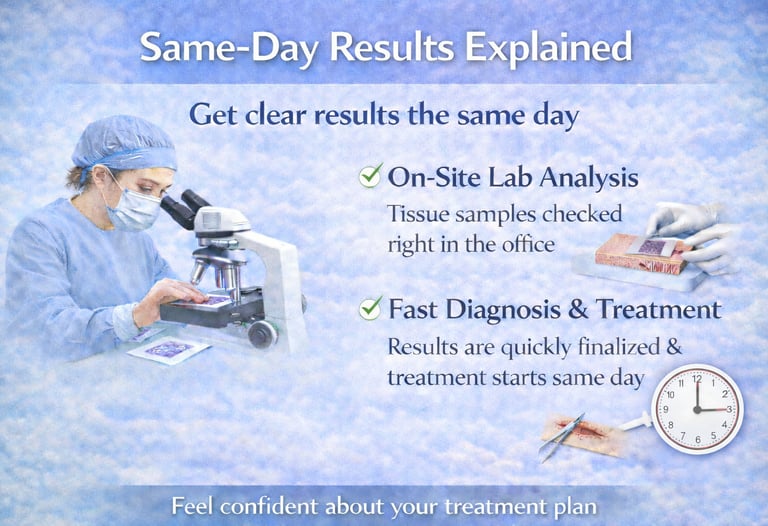
Mohs surgery provides same-day results by examining removed tissue during the procedure. This page explains how same-day analysis works, why it matters for treatment accuracy, and what patients can expect throughout the process.
Waiting for medical results can be stressful, especially after a skin cancer diagnosis. One of the key benefits of Mohs surgery is that it allows skin cancer removal and microscopic examination to occur on the same day. This approach reduces uncertainty and helps patients move forward with greater clarity and confidence.
During Mohs surgery, the surgeon examines each layer of removed tissue under a microscope while you wait. This real-time evaluation allows the Mohs surgeon to determine whether cancer cells remain and to continue treatment immediately if needed. For many patients, receiving results the same day provides reassurance and avoids the delays often associated with traditional laboratory testing.
What “Same-Day Results” Means in Mohs Surgery
In Mohs surgery, “same-day results” means that skin cancer tissue is examined and evaluated while you are still in the office. Instead of sending samples to an outside laboratory, the Mohs surgeon reviews the tissue on-site between stages of the procedure. This allows treatment decisions to be made immediately based on what is seen under the microscope.
This process helps ensure complete skin cancer removal while preserving as much healthy tissue as possible. Patients remain involved and informed throughout the day, rather than waiting days for follow-up results.
How Mohs Surgery Is Different from Traditional Pathology
With many other skin cancer treatments, tissue removed during dermatologic surgery is sent to a pathology lab for analysis. Results may take several days, and if cancer cells are found at the margins, additional treatment may be required at a later visit.
Mohs surgery differs because the Mohs surgeon acts as both surgeon and pathologist. Each layer of tissue is carefully mapped, processed, and examined in real time. This allows precise identification of where cancer cells remain, rather than relying on sampling alone.
Why Results Are Available the Same Day
Same-day results are possible because Mohs surgery is performed in stages, with microscopic examination built into the procedure. After each layer is removed, the tissue is prepared and analyzed on-site.
If cancer cells are still present, another layer is removed only from the affected area. This cycle continues until no cancer cells are detected. Because this process happens during your visit, patients typically leave knowing that the treated skin cancer has been fully addressed.
How Skin Cancer Is Examined During Mohs Surgery
A key feature of Mohs surgery is the detailed examination of skin cancer tissue as it is removed. This careful process allows the Mohs surgeon to evaluate cancer cells immediately and determine whether additional treatment is needed. By examining the tissue during the procedure, Mohs surgery offers a high level of precision in skin cancer removal.
This approach is especially valuable for basal cell carcinoma and squamous cell carcinoma, where clearly identifying cancer margins is critical for successful treatment.
Real-Time Microscopic Analysis
After each layer of skin is removed, the tissue is processed in an on-site laboratory and examined under a microscope by the Mohs surgeon. This real-time microscopic analysis allows the surgeon to see the entire edge and underside of the removed tissue.
By reviewing the tissue immediately, the surgeon can determine whether cancer cells remain at the margins. If cancer is still present, additional tissue can be removed during the same visit, avoiding delays in care.
Mapping & Margin Evaluation
Mapping is an essential part of Mohs surgery. The surgeon creates a detailed diagram that corresponds to the exact location of the removed tissue on the skin. This map guides the surgeon to areas where cancer cells are detected under the microscope.
Margin evaluation focuses on checking the edges of the removed tissue for remaining cancer cells. This precise mapping and margin control allow the Mohs surgeon to target only affected areas, preserving as much healthy skin as possible while ensuring thorough skin cancer removal.
What Happens While You Wait for Results
Waiting between stages is a normal part of Mohs surgery and an important step in ensuring complete skin cancer removal. While you rest comfortably, the removed tissue is carefully prepared and examined. Understanding what happens during this time can help the waiting period feel less uncertain.
The length of each waiting period can vary, but it is necessary to allow for accurate evaluation of the tissue before the next step of treatment.
Tissue Processing & Slide Preparation
After a layer of skin is removed, the tissue is taken to an on-site laboratory. There, it is processed, frozen, and thinly sliced so it can be placed onto microscope slides. These slides are then stained to highlight cells and structures clearly.
The Mohs surgeon examines the slides under a microscope to check for remaining cancer cells at the margins. This careful preparation and review take time but are essential for accurate, same-day results.
What Patients Do Between Stages
While tissue is being examined, patients typically relax in a waiting area. This time can range from 30 minutes to over an hour, depending on the complexity of the case.
During this period, patients may:
Read, listen to music, or use a mobile device
Rest quietly or enjoy light conversation
Have a snack or beverage if permitted
The care team will keep you informed and let you know when the next stage is ready, helping the day move forward as smoothly as possible.
How Mohs Results Guide the Next Step
The results obtained during Mohs surgery directly determine what happens next in your care. Because skin cancer is examined in real time, the Mohs surgeon can make immediate, informed decisions during the same visit. This step-by-step approach allows treatment to be tailored precisely to your individual case.
Each stage builds on the information gathered from the microscopic analysis, helping ensure thorough skin cancer removal while preserving healthy tissue.
When Cancer Is Still Present
If cancer cells are detected at the margins of the removed tissue, the Mohs surgeon will identify their exact location using the surgical map. An additional layer of skin is then removed only from the area where cancer remains.
This targeted approach limits unnecessary removal of healthy skin and allows the surgeon to address remaining cancer during the same appointment. The process is repeated until no cancer cells are seen.
When Cancer Has Been Fully Removed
Once the microscopic examination shows clear margins, no further tissue removal is needed. At this point, the focus shifts from cancer removal to wound management and healing.
Depending on the size and location of the surgical site, the Mohs surgeon will discuss appropriate next steps, which may include allowing the area to heal naturally or performing a repair. Patients typically leave the office knowing that the treated skin cancer has been fully addressed.
Accuracy of Same-Day Mohs Results
Accuracy is one of the defining strengths of Mohs surgery. Same-day results are not rushed findings, but the outcome of a meticulous and methodical process designed to identify skin cancer cells with precision. This careful approach helps ensure that treatment decisions are based on thorough information gathered during the procedure.
Mohs surgery is widely recognized as a highly effective form of dermatologic surgery for certain types of skin cancer, including basal cell carcinoma and squamous cell carcinoma.
Complete Margin Examination
Unlike many other skin cancer treatments, Mohs surgery allows for examination of nearly 100 percent of the surgical margins. This means the entire outer edge and underside of the removed tissue are evaluated under the microscope.
By examining the complete margins, the Mohs surgeon can detect even small areas where cancer cells may remain. This level of detail reduces the likelihood that cancer is left behind and supports accurate same-day decision-making.
Why Mohs Results Are Highly Reliable
Mohs results are considered highly reliable because the same physician removes the tissue, processes it, and examines it microscopically. This continuity reduces the chance of miscommunication and allows for precise correlation between what is seen on the skin and what appears under the microscope.
The combination of detailed mapping, complete margin evaluation, and real-time analysis contributes to the overall accuracy of Mohs surgery. For patients, this means greater confidence in the results they receive before leaving the office.
Same-Day Results vs. Traditional Biopsy Results
Mohs surgery differs from many other skin cancer treatments in how and when results are delivered. Understanding the difference between same-day Mohs results and traditional biopsy or pathology reports can help patients appreciate why Mohs surgery is often recommended for certain skin cancers and locations.
Both approaches play important roles in dermatologic care, but they offer very different timelines and levels of immediacy.
Pathology Timing Differences
With traditional biopsies or excisions, tissue is typically sent to an outside pathology laboratory. Results may take several days to a week or longer to return. If cancer cells are found at the edges of the sample, additional treatment may be scheduled for a later date.
In Mohs surgery, tissue processing and microscopic examination are performed on-site during the procedure. This allows the Mohs surgeon to review results the same day, often within an hour of tissue removal.
Impact on Treatment Planning
Delayed pathology results can sometimes mean multiple appointments or additional procedures if cancer is not fully removed initially. Treatment decisions are made after results are received, which may extend the overall course of care.
Same-day results with Mohs surgery allow treatment to be adjusted immediately. If cancer remains, it can be addressed right away. Once clear margins are confirmed, wound repair and healing plans can move forward without delay, providing patients with timely clarity and continuity of care.
Benefits of Same-Day Results for Patients
Same-day results are one of the most patient-centered aspects of Mohs surgery. By combining skin cancer removal and microscopic evaluation into a single visit, Mohs surgery helps streamline care and reduce uncertainty. Many patients find comfort in knowing that important answers are available before they leave the office.
This approach can be especially reassuring for patients facing a recent skin cancer diagnosis.
Reduced Anxiety
Waiting days or weeks for pathology results can be stressful. Same-day results allow patients to know whether cancer has been fully removed without prolonged uncertainty.
Because the Mohs surgeon reviews the tissue during the procedure, patients receive clear updates throughout the day. This ongoing communication helps reduce anxiety and allows patients to feel more informed and supported.
Faster Treatment Completion
With Mohs surgery, treatment is typically completed in one visit. If additional cancer is found, it can be addressed immediately rather than scheduling a separate procedure.
This efficiency reduces the need for repeat appointments and allows patients to move forward with healing and recovery sooner. For many, completing treatment the same day provides both practical convenience and emotional relief.
Frequently Asked Questions About Same-Day Mohs Results
Patients often have questions about how same-day results work and what they mean for care and recovery. The following answers address common concerns and provide general information about the Mohs surgery process.
Common Patient Questions
Do same-day results mean the cancer is cured?
Same-day results indicate whether cancer cells are still present at the surgical margins during Mohs surgery. While Mohs surgery is highly effective for certain skin cancers, no treatment can guarantee outcomes. Your Mohs surgeon will discuss results and appropriate follow-up care.
How long does it take to get results during Mohs surgery?
Results are typically available within 30 minutes to over an hour after each stage of tissue removal. The exact timing depends on how long tissue processing and microscopic examination take.
Will I be told the results right away?
Yes. The Mohs surgeon or a member of the care team will explain the findings after each stage and let you know whether additional treatment is needed.
What happens if cancer is found at the margins?
If cancer cells are detected, another layer of tissue is removed only from the affected area. This process continues until clear margins are achieved.
Is Mohs surgery the only way to get same-day results?
Mohs surgery is unique in offering complete margin evaluation with immediate results during skin cancer removal. Other dermatologic surgery procedures may use different methods that do not provide real-time microscopic analysis.
Request a Mohs Consultation


Copyright © 2026 | Savannah Mohs Surgery | All Rights Reserved.
Privacy Policy | Terms and Conditions | Accessibility
Monday: 8:00am - 5:00pm
Tuesday: 8:00am - 5:00pm
Wednesday: 8:00am - 5:00pm
Thursday: 8:00am - 5:00pm
Friday: 8:00am - 5:00pm
Office Hours
Learn More
Reach Out
Resources
Address
Request Consultation
Call Now
(704) 858-6585
Savannah Mohs Surgery
Serving Savannah, GA and Surrounding areas.

