
Scarring After Mohs Surgery: What to Expect
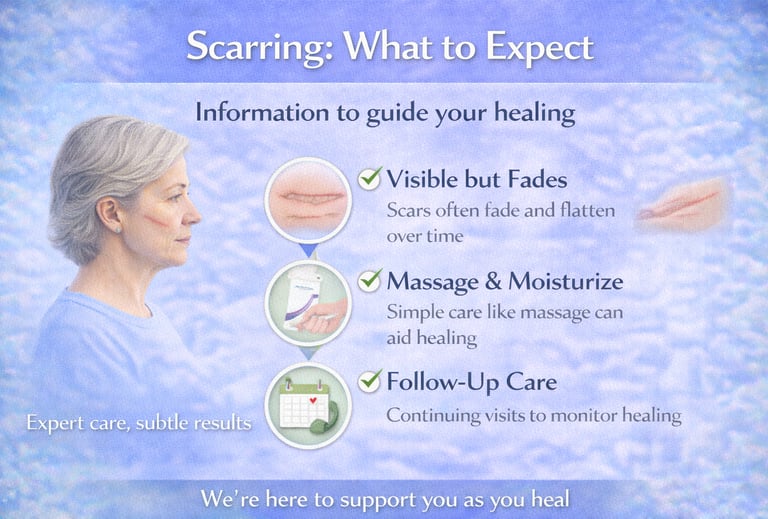
Scarring is a normal part of healing after skin cancer surgery. This page explains why scars form after Mohs surgery, how they typically change over time, and what factors influence the appearance of a scar during recovery.
Concerns about scarring are common after a diagnosis that requires Mohs surgery, especially when skin cancer is located on the face or other visible areas. While Mohs surgery is designed to remove cancer while preserving as much healthy skin as possible, any form of dermatologic surgery can result in a scar. Understanding how and why scars form can help set realistic expectations.
Scarring after Mohs surgery varies based on the size and location of the skin cancer, as well as individual healing factors. Mohs surgeons use precise techniques and thoughtful wound management to support the best possible healing, while focusing first on complete and accurate skin cancer removal.
Why Scarring Occurs After Mohs Surgery
Scarring is a natural part of the body’s healing response after skin cancer removal. Mohs surgery removes cancerous tissue layer by layer, and once the cancer is fully removed, the skin must repair itself. This healing process results in new tissue formation, which appears as a scar.
While the goal of Mohs surgery is to preserve as much healthy skin as possible, any time the skin is cut or repaired, some degree of scarring is expected.
How Skin Heals After Cancer Removal
After Mohs surgery, the body begins a structured healing process. Blood clotting occurs first, followed by inflammation and the growth of new tissue. Over time, collagen is produced to strengthen the area and close the wound.
As healing progresses, the scar may appear red, raised, or firm at first. These early changes are typical and often improve gradually over several months as the skin continues to remodel.
Why Scarring Is Unavoidable but Manageable
Scarring cannot be completely avoided because it is part of how the skin repairs itself after dermatologic surgery. However, Mohs surgery is designed to minimize scarring by removing only tissue affected by skin cancer.
Careful surgical techniques, thoughtful wound closure, and proper aftercare all play a role in how a scar ultimately looks. While scars are permanent, many become less noticeable over time and blend more naturally with the surrounding skin.
What Mohs Surgery Scars Typically Look Like
Scars from Mohs surgery can look different from person to person. Their appearance depends on factors such as the size and location of the skin cancer, how the wound is repaired, and individual healing responses. Understanding the typical progression of a scar can help patients know what to expect during recovery.
Mohs surgeons plan wound repair carefully to support healing and minimize the visibility of scars whenever possible.
Early Appearance of Scars
In the first weeks after Mohs surgery, scars often appear more noticeable.
It is common for the area to look:
Red or pink
Slightly raised or firm
Swollen or bruised
These early changes are a normal part of the healing process. Stitches, bandages, or scabs may also be present as the skin begins to repair itself.
How Scars Change Over Time
Over the following months, most scars gradually soften and fade. Redness often lessens, and the scar may become flatter and closer to the surrounding skin tone.
Scar maturation can take several months to a year or longer. During this time, continued collagen remodeling helps improve the texture and appearance of the scar, making it less noticeable for many patients.
Factors That Influence Scarring
Several factors affect how a scar looks after Mohs surgery. Some are related to the skin cancer itself, while others depend on individual healing responses. Understanding these influences can help explain why scars vary from patient to patient.
Your Mohs surgeon considers all of these factors when planning skin cancer removal and wound repair.
Location of the Surgical Site
The location of the surgical site plays a major role in scar appearance. Areas with thinner skin, frequent movement, or higher tension—such as the nose, lips, eyelids, shoulders, or chest, may heal differently than flatter, less mobile areas.
Facial scars often heal well because of good blood supply, while areas under more tension may take longer to soften and fade.
Size & Depth of the Wound
Larger or deeper wounds generally require more healing time and may result in more noticeable scars. Skin cancers that extend deeper into the skin can require additional tissue removal during Mohs surgery.
The method used to close the wound, such as stitches, flaps, or grafts—also influences how the scar forms and matures.
Individual Healing Factors
Each person’s body heals differently. Age, skin type, genetics, and overall health can all affect scar formation. Some individuals naturally form thicker or more prominent scars, while others heal with minimal visible changes.
How Reconstruction Affects Scarring
After Mohs surgery, attention turns to how the surgical site will heal. The method used to repair the wound—known as reconstruction—can influence both healing and the appearance of the scar. Mohs surgeons select reconstruction techniques based on medical need, skin tension, and cosmetic considerations.
The primary goal of reconstruction is safe healing and restoration of function, with scar appearance considered as part of the overall plan.
Primary Closure vs. Flaps & Grafts
Primary closure involves bringing the edges of the wound together with stitches. This method is often used for smaller wounds and may result in a thin, linear scar.
For larger or more complex wounds, flaps or grafts may be needed
Flaps use nearby skin that is repositioned to cover the area
Grafts involve skin taken from another location
These techniques allow wounds to heal properly when simple closure is not possible, though they may create more complex scar patterns that improve over time.
Scar Placement & Natural Skin Lines
Whenever possible, Mohs surgeons plan repairs to align scars with natural skin lines or creases. Placing scars along these lines can help them blend more naturally with surrounding skin.
Attention to scar placement, skin tension, and tissue movement helps support better long-term cosmetic outcomes while maintaining the safety and effectiveness of skin cancer removal.
Scar Maturation Timeline
Scars continue to change long after Mohs surgery is completed. This process, known as scar maturation, reflects the skin’s ongoing healing and remodeling. Understanding the typical timeline can help patients maintain realistic expectations as the scar evolves.
While individual healing varies, most scars improve gradually over time with proper care and patience.
First Few Weeks
During the first several weeks after Mohs surgery, the scar is often at its most noticeable. Common changes include redness, firmness, and mild swelling. The area may feel tight or slightly tender as the skin heals and stitches are removed.
This early phase is part of normal wound healing. Protecting the area, following wound care instructions, and avoiding unnecessary tension on the site support healthy early healing.
Months After Surgery
Over the following months, the scar typically begins to soften and fade. Red or pink coloring often lightens, and the texture becomes smoother as collagen reorganizes beneath the skin.
Scar maturation can continue for up to a year or longer. During this time, gradual improvement is expected, with many scars becoming less noticeable and blending more naturally with the surrounding skin.
Ways to Minimize Scar Appearance
While scarring cannot be completely prevented, there are steps that may help support healthy healing and reduce how noticeable a scar becomes after Mohs surgery. Proper care during the weeks and months following skin cancer removal plays an important role in scar appearance.
Your Mohs surgeon will provide personalized aftercare instructions based on your surgical site and type of repair.
Sun Protection
Protecting the healing area from sun exposure is one of the most important ways to support scar improvement. Sun exposure can cause scars to darken or become more noticeable.
Common sun protection measures may include:
Using a broad-spectrum sunscreen once healing allows
Wearing hats or protective clothing when outdoors
Avoiding prolonged direct sun exposure to the surgical area
Consistent sun protection can help scars fade more evenly over time.
Scar Care Techniques
Once the surgical site has healed, certain scar care techniques may be recommended. These can include gentle massage, moisturizing, or the use of silicone-based products, depending on the situation.
Following your care team’s guidance helps support proper healing. Avoiding unnecessary trauma to the area and allowing time for natural scar maturation are also important parts of the process.
When a Scar May Need Additional Treatment
Most scars after Mohs surgery improve on their own over time. In some cases, however, a scar may heal in a way that causes ongoing concerns about comfort or appearance. Recognizing when a scar is not following a typical healing pattern can help guide appropriate follow-up care.
If you have concerns about how a scar is healing, your Mohs surgeon can evaluate the area and discuss whether additional treatment may be helpful.
Raised or Thickened Scars
Some scars become raised, firm, or thickened as they heal. This may occur due to increased collagen production during the healing process. These changes can make a scar feel tight or more noticeable.
If a scar continues to thicken or does not soften over time, your dermatologist may discuss options to help improve texture and flexibility, depending on the individual situation.
Redness or Persistent Visibility
It is normal for scars to appear red or pink for several months after surgery. In some cases, redness or visibility may last longer than expected.
Persistent color changes or noticeable scars can sometimes be addressed with additional treatments once healing is complete. Your care team can help determine whether intervention is appropriate and advise on next steps.
Setting Realistic Expectations
When considering scarring after Mohs surgery, it is important to approach healing with realistic expectations. Every patient heals differently, and scars change gradually over time. Understanding the goals of Mohs surgery can help place cosmetic outcomes in proper perspective.
Open communication with your Mohs surgeon allows you to better understand what is typical and what improvements may occur as healing progresses.
Cosmetic Outcomes vs. Cancer Cure
The primary purpose of Mohs surgery is complete and accurate skin cancer removal. While cosmetic considerations are important, they are always secondary to ensuring that cancer cells are fully treated.
Mohs surgery is designed to preserve as much healthy skin as possible, which supports both effective cancer treatment and favorable cosmetic results. However, no surgical procedure can eliminate scarring entirely.
Balancing Appearance and Health
Balancing appearance with long-term health is a key part of treatment planning. Mohs surgeons carefully consider wound repair techniques that support healing, function, and appearance.
Over time, many patients find that scars become less noticeable and easier to accept. Focusing on healing and overall skin health can help support both physical recovery and peace of mind.
Frequently Asked Questions About Scarring After Mohs Surgery
Scarring is a common concern for patients undergoing Mohs surgery, especially when treatment involves visible areas of the skin. The questions below address frequent concerns and provide general information about what to expect during healing.
Common Scar-Related Questions
Will everyone have a visible scar after Mohs surgery?
Any surgical procedure that removes skin can result in a scar. While scars are permanent, their visibility varies based on factors such as location, wound size, and individual healing.
How long does it take for a Mohs surgery scar to heal?
Initial healing occurs within a few weeks, but scar maturation continues for several months to a year or longer. Appearance often improves gradually over time.
Will my scar fade completely?
Scars do not disappear entirely, but many fade and become less noticeable as they mature. The final appearance depends on individual healing and proper scar care.
Can anything be done to improve the appearance of a scar?
In many cases, proper wound care, sun protection, and time are sufficient. If a scar remains raised, red, or bothersome, your Mohs surgeon can evaluate whether additional options are appropriate.
Is scarring worse with Mohs surgery compared to other treatments?
Mohs surgery is designed to remove only cancerous tissue, which helps preserve healthy skin. For many patients, this tissue-sparing approach supports better cosmetic outcomes compared to less precise skin cancer removal methods.


Request a Mohs Consultation
Copyright © 2026 | Savannah Mohs Surgery | All Rights Reserved.
Privacy Policy | Terms and Conditions | Accessibility
Monday: 8:00am - 5:00pm
Tuesday: 8:00am - 5:00pm
Wednesday: 8:00am - 5:00pm
Thursday: 8:00am - 5:00pm
Friday: 8:00am - 5:00pm
Office Hours
Learn More
Reach Out
Resources
Address
Request Consultation
Call Now
(704) 858-6585
Savannah Mohs Surgery
Serving Savannah, GA and Surrounding areas.

