
Healing Timeline After
Mohs Surgery
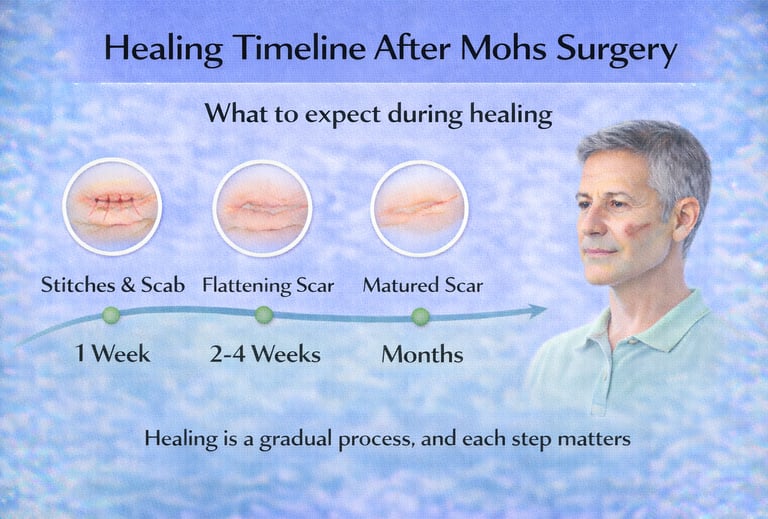
Healing after Mohs surgery occurs gradually and varies based on the size and location of the surgical site. This page outlines the typical healing timeline, what patients may experience during recovery, and when follow-up care is important.
Healing after Mohs surgery occurs gradually and continues well beyond the day of treatment. While the procedure is designed to remove skin cancer with precision, the body needs time to repair the surgical site and surrounding tissue.
Understanding the typical healing timeline helps set realistic expectations and can make recovery feel more manageable. Although healing experiences vary, most patients progress steadily with proper wound care, follow-up, and attention to overall skin health.
Understanding the Healing Process After Mohs Surgery
Healing after Mohs surgery happens in phases as the body repairs the skin and underlying tissue. Each stage plays a role in restoring strength, function, and appearance to the treated area.
Why Healing Takes Place in Stages
After surgery, the body begins by forming a protective barrier and controlling inflammation. This is followed by the growth of new tissue and blood vessels, and later by gradual remodeling of the skin.
Because these processes occur over time, changes in appearance and sensation are normal during healing. Improvement continues for weeks to months after the procedure.
Factors That Affect Healing Time
Healing time varies from person to person and depends on several factors, including:
The size and location of the surgical site
The type of repair performed
Individual health and circulation
Adherence to wound care instructions
Your care team provides guidance based on these factors to support safe and effective healing.
The First 24–48 Hours After Mohs Surgery
The first one to two days after Mohs surgery are an important early phase of healing. During this time, the body begins repairing the surgical site, and certain changes are expected.
Normal Changes During Early Healing
It is normal for the treated area to appear red, tender, or slightly swollen shortly after surgery. Some tightness or mild discomfort may also be noticed as the skin begins to heal.
These early changes typically improve gradually over the first few days.
Swelling, Bruising & Mild Bleeding
Swelling and bruising are common, especially when surgery is performed on the face or near the eyes. Swelling may increase during the first 24 to 48 hours before starting to resolve.
Mild oozing or bleeding can also occur during this period. Applying firm, direct pressure as instructed usually controls minor bleeding and supports proper healing.
The First Week of Healing
During the first week after Mohs surgery, the surgical site continues to stabilize as early healing progresses. Many patients notice gradual improvement in comfort and appearance during this time.
What the Wound May Look Like
The wound may appear red or pink and may have mild swelling or bruising. Some drainage or crusting can occur as the area heals, especially if stitches are present.
These changes are typical during early recovery and usually lessen as healing continues.
Activity & Daily Life Expectations
Most patients can return to light daily activities during the first week. Strenuous exercise, heavy lifting, and activities that strain the surgical area are usually limited.
Following activity guidelines helps protect the wound and reduce the risk of bleeding or delayed healing.
Weeks 2–4 After Surgery
Between the second and fourth weeks after Mohs surgery, healing continues as the skin gains strength and flexibility. During this phase, visible changes often become more noticeable as the wound matures.
Continued Tissue Healing
Redness and swelling typically continue to improve during this period, although some pinkness may remain. The area may feel firm or slightly raised as new tissue forms.
These changes are part of normal healing and usually improve over time.
Stitches Removal & Wound Maturation
If stitches were placed, they are often removed within this timeframe, depending on the location and repair type. Once stitches are removed, the wound continues to strengthen and smooth out.
Scar tissue gradually remodels during this stage, with continued improvement in texture and appearance over the coming months.
One to Three Months After Mohs Surgery
The months following Mohs surgery are an important time for scar development and continued healing. Although the surgical site may look healed on the surface, deeper skin remodeling is still underway.
Scar Formation & Remodeling
Scar tissue continues to reorganize and strengthen during this phase. The scar may appear more noticeable at times as collagen builds and realigns.
With proper care and time, scars often soften and become less prominent as healing progresses.
Changes in Color, Texture & Firmness
It is common for scars to appear pink or reddish and feel firm during the early months. Some areas may feel slightly raised or uneven.
These changes typically improve gradually over several months as the skin continues to mature and remodel.
Long-Term Healing & Scar Maturation
Long-term healing after Mohs surgery continues well beyond the initial recovery period. The skin gradually strengthens and remodels, leading to ongoing changes in the appearance and feel of the surgical site.
How Long Full Healing Takes
While the wound usually heals within weeks, full scar maturation can take six months to a year or longer. During this time, the scar continues to soften, flatten, and fade in color.
The pace of healing varies based on the individual, the location of the surgery, and the type of repair performed.
What Is Considered a Normal Final Result
A normal final result is a stable, well-healed area that blends as naturally as possible with surrounding skin. Some degree of scarring is expected after any surgical procedure.
Over time, most scars become less noticeable, although they may not disappear completely. Ongoing sun protection and scar care support the best long-term outcome.
Healing Differences Based on Repair Type
Healing after Mohs surgery can vary depending on how the surgical site is repaired. The repair method is chosen based on the size, depth, and location of the wound, with the goal of supporting proper healing and function.
Healing After Primary Closure
Primary closure involves bringing the edges of the wound together with stitches. This approach is often used for smaller wounds or areas with enough surrounding skin to close the site directly.
Healing after primary closure typically follows a predictable course, with gradual improvement in redness and firmness as the scar matures over time.
Healing After Skin Flaps or Grafts
Skin flaps and grafts are used when direct closure is not possible or would place too much tension on the skin. A flap uses nearby skin to cover the wound, while a graft uses skin from another area of the body.
These repairs may have a longer or more noticeable early healing phase. Changes in color, swelling, or texture are common at first and usually improve as blood supply and tissue integration develop.
When Healing Does Not Follow the Expected Timeline
Most patients heal steadily after Mohs surgery, but healing timelines can vary. In some cases, the recovery process may take longer than expected, especially in certain areas of the body or in individuals with specific health factors.
Delayed Healing
Delayed healing may occur when blood supply is limited, the surgical site is under tension, or underlying health conditions affect tissue repair. Areas such as the lower legs may heal more slowly than other parts of the body.
Signs of delayed healing can include persistent redness, slow closure of the wound, or continued tenderness beyond the expected timeframe.
When to Contact the Office
Patients should contact the office if they notice:
Worsening pain, redness, or swelling
Signs of infection, such as warmth or drainage
A wound that is not improving over time
Early communication allows the care team to evaluate healing and provide appropriate guidance.
Frequently Asked Questions About the Mohs Healing Timeline
Common Healing-Related Questions
How long does it take for the wound to heal after Mohs surgery?
Initial wound healing usually occurs within a few weeks. However, full healing and scar maturation can take several months or longer, depending on the size, location, and type of repair.
Is it normal for the scar to look worse before it looks better?
Yes. Scars often appear more noticeable during the early healing stages and may look red, firm, or raised at first. These changes typically improve gradually over time.
Will my scar continue to change months after surgery?
Yes. Scar remodeling continues for many months after Mohs surgery. Changes in color, texture, and firmness are part of the normal healing process.
Why does my healing timeline differ from someone else’s?
Healing varies based on individual factors such as age, overall health, circulation, and the location of the surgical site. Different repair methods also affect healing time.
When should I be concerned about how my wound is healing?
Contact the office if healing seems to worsen, if pain or redness increases, or if there are signs of infection. Prompt evaluation helps ensure safe recovery.
Request a Mohs Consultation


Copyright © 2026 | Savannah Mohs Surgery | All Rights Reserved.
Privacy Policy | Terms and Conditions | Accessibility
Monday: 8:00am - 5:00pm
Tuesday: 8:00am - 5:00pm
Wednesday: 8:00am - 5:00pm
Thursday: 8:00am - 5:00pm
Friday: 8:00am - 5:00pm
Office Hours
Learn More
Reach Out
Resources
Address
Request Consultation
Call Now
(704) 858-6585
Savannah Mohs Surgery
Serving Savannah, GA and Surrounding areas.

