
Skin Cancer Diagnosis
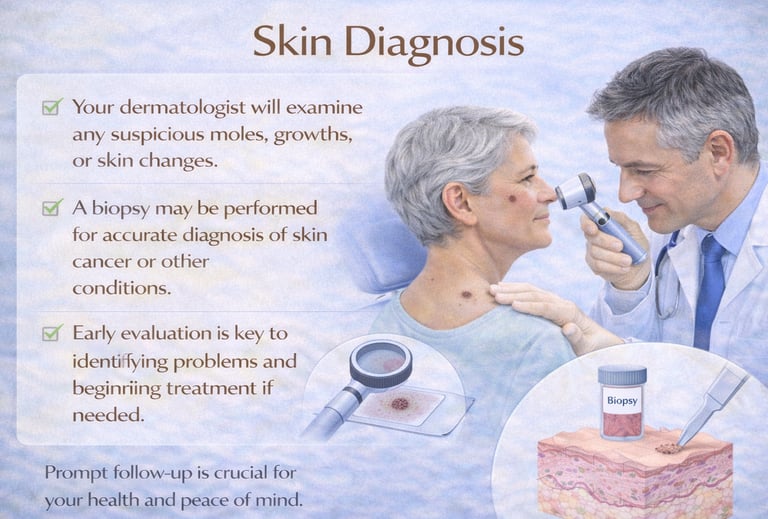
Accurate skin diagnosis is the first step in effective skin cancer care. This page explains how dermatologists evaluate skin concerns, when a biopsy may be recommended, and how a diagnosis helps guide appropriate treatment decisions.
A skin cancer diagnosis can feel overwhelming, especially when it comes unexpectedly. Understanding what your diagnosis means is an important first step in making informed decisions about your care. A clear and accurate skin diagnosis helps determine whether treatment is needed and which approach is most appropriate.
Skin diagnosis typically begins with a careful skin examination and, when necessary, a biopsy. These evaluations allow a dermatology specialist to identify abnormal cells and determine whether a growth is cancerous or noncancerous. The results guide next steps, which may include monitoring, additional testing, or treatment such as skin cancer removal with dermatologic surgery, including Mohs surgery when appropriate.
Why Accurate Skin Diagnosis Matters
An accurate skin diagnosis is essential for choosing the safest and most effective treatment. Different skin conditions can look similar on the surface, but their behavior and treatment needs may vary significantly. Proper diagnosis helps ensure that skin cancer is identified early and that unnecessary or inappropriate treatments are avoided.
Early Detection of Skin Cancer
Detecting skin cancer at an early stage allows for simpler treatment and better preservation of healthy tissue. Early diagnosis can identify common skin cancers such as basal cell carcinoma and squamous cell carcinoma before they grow deeper or spread. In some cases, early detection may make specialized procedures like Mohs surgery an effective option for complete skin cancer removal while minimizing damage to surrounding skin.
Importance of Proper Diagnosis Before Treatment
Before any treatment begins, it is important to confirm the exact type and extent of a skin condition. A precise diagnosis helps determine whether a lesion requires surgical treatment, careful monitoring, or another dermatologic approach. This step ensures that procedures such as dermatologic surgery or Mohs surgery are used only when medically appropriate and tailored to the specific diagnosis.
How Skin Cancer Is Diagnosed
Diagnosing skin cancer involves a careful, step-by-step evaluation to identify abnormal skin changes and determine whether further testing is needed. Dermatology specialists use both visual assessment and specialized tools to evaluate suspicious spots accurately and safely.
Visual Skin Examination
A visual skin examination is often the first step in diagnosing skin cancer. During this exam, a trained clinician carefully inspects the skin for changes in size, shape, color, or texture that may suggest cancerous growth. Particular attention is given to lesions that bleed, do not heal, or change over time, as these features can be associated with basal cell carcinoma or squamous cell carcinoma.
Dermoscopy & Advanced Imaging
Dermoscopy is a noninvasive technique that uses a handheld device to magnify and illuminate the skin. This tool allows the clinician to see structures beneath the surface that are not visible to the naked eye, improving diagnostic accuracy. In some cases, advanced imaging technologies may be used to further evaluate concerning lesions and determine whether a biopsy or additional dermatologic surgery is needed.
Skin Biopsy Explained
When a skin growth cannot be clearly identified through examination alone, a skin biopsy is often recommended. A biopsy provides definitive information by allowing the tissue to be examined under a microscope. This step is essential for confirming or ruling out skin cancer and guiding appropriate treatment options, including Mohs surgery when indicated.
What a Skin Biopsy Is
A skin biopsy is a minor medical procedure in which a small sample of skin is removed for laboratory analysis. The procedure is typically performed in a dermatology office using local anesthesia to minimize discomfort. The tissue sample is sent to a pathology laboratory, where it is evaluated for abnormal or cancerous cells.
Types of Skin Biopsies
There are several types of skin biopsies, and the method used depends on the size, location, and appearance of the lesion. Common biopsy types include:
Shave biopsy: Removes the top layers of skin and is often used for superficial lesions
Punch biopsy: Uses a small circular tool to remove a deeper skin sample
Excisional biopsy: Removes the entire lesion and a margin of surrounding skin
Each approach is chosen to provide accurate diagnostic information while preserving as much healthy tissue as possible.
What the Biopsy Can Show
A skin biopsy can identify whether a lesion is benign or cancerous. It can also determine the specific type of skin cancer, such as basal cell carcinoma or squamous cell carcinoma, and provide details about how aggressive the cancer may be. These findings help guide treatment decisions, including whether skin cancer removal with dermatologic surgery or Mohs surgery is recommended.
Understanding Your Biopsy Results
Biopsy results provide important information about the nature of a skin lesion and help guide next steps in care. While waiting for results can be stressful, understanding the basic terms used in a pathology report can make the information easier to process. Your dermatologist will review the findings with you and explain what they mean for your treatment plan.
Benign vs Cancerous Findings
A benign biopsy result means that no cancer is present. Benign growths may still require monitoring or treatment, but they do not spread to other parts of the body.
A cancerous result indicates the presence of abnormal cells that can continue to grow and damage surrounding tissue if left untreated. When skin cancer is diagnosed, treatment options are discussed based on the type, size, location, and behavior of the cancer.
Basal Cell vs Squamous Cell Carcinoma
Basal cell carcinoma and squamous cell carcinoma are the two most common types of skin cancer.
Basal cell carcinoma typically grows slowly and rarely spreads, but it can cause local tissue damage if not treated.
Squamous cell carcinoma may grow more quickly and has a higher risk of spreading, especially if left untreated.
Accurately identifying the type of skin cancer helps determine whether treatments such as dermatologic surgery or Mohs surgery are appropriate for complete skin cancer removal while preserving healthy tissue.
When a Diagnosis Leads to Mohs Surgery
Not every skin cancer requires Mohs surgery. This specialized form of dermatologic surgery is recommended when specific features are present that make precise skin cancer removal especially important. A clear diagnosis helps determine whether Mohs surgery offers the best balance of effectiveness and tissue preservation.
Features That Make Mohs Surgery Appropriate
Mohs surgery may be recommended based on the type, location, and behavior of the skin cancer. Features that often support the use of Mohs surgery include:
Basal cell carcinoma or squamous cell carcinoma with higher risk features
Tumors located on the face, ears, scalp, hands, feet, or genital area
Recurrent skin cancers or tumors with poorly defined borders
Cancers that have grown deeper or show aggressive characteristics
These factors increase the importance of removing all cancer cells while protecting as much healthy tissue as possible.
Referral to a Mohs Surgeon
When Mohs surgery is recommended, patients are typically referred to a fellowship-trained Mohs surgeon. This specialist has advanced training in both skin cancer removal and surgical reconstruction. The referral ensures that treatment is guided by a precise diagnosis and performed using a technique designed for accuracy, safety, and long-term skin health.
What Happens After a Skin Cancer Diagnosis
Receiving a skin cancer diagnosis can raise many questions about what comes next. The period after diagnosis focuses on confirming details, discussing treatment options, and planning care in a thoughtful and organized way. This approach helps ensure that treatment is appropriate for the specific type of skin cancer and individual circumstances.
Next Steps After Diagnosis
After a diagnosis is confirmed, your dermatologist will review the biopsy results and discuss whether treatment is recommended. Additional evaluation may be needed to better understand the size, depth, or location of the cancer. In some cases, this step helps determine whether skin cancer removal with dermatologic surgery, including Mohs surgery, is the most suitable option.
Treatment Planning & Consultation
Treatment planning typically includes a consultation to review available options, expected steps, and general recovery considerations. During this visit, patients have the opportunity to ask questions and gain clarity about the recommended approach. When Mohs surgery is advised, the consultation with a Mohs surgeon focuses on explaining the procedure, outlining the process, and ensuring patients feel informed and prepared before treatment begins.
Common Signs That Should Be Evaluated
Certain skin changes may indicate the need for professional evaluation. While not every skin change is serious, recognizing concerning signs early can lead to timely diagnosis and appropriate care. A dermatology evaluation helps determine whether a lesion is benign or requires further testing.
Changes in Size, Color, or Shape
Lesions that change over time should be examined by a medical professional. Concerning changes may include growth in size, irregular or uneven borders, or variation in color. These features can be seen in some types of skin cancer, including basal cell carcinoma and squamous cell carcinoma, and warrant closer evaluation.
Non-Healing or Bleeding Lesions
A spot that does not heal within several weeks, or one that repeatedly bleeds, crusts, or scabs, should be assessed by a dermatologist. Persistent irritation or open sores may indicate underlying skin cancer and should not be ignored. Early evaluation supports accurate diagnosis and timely treatment, which may include skin cancer removal through dermatologic surgery or Mohs surgery when appropriate.
Frequently Asked Questions About Skin Diagnosis
Common Diagnostic Questions
How long does it take to receive biopsy results?
Biopsy results are typically available within one to two weeks, depending on the laboratory and the type of analysis required. Your dermatology office will contact you once results are ready and review the findings with you.
Does a skin biopsy mean I have cancer?
No. A biopsy is performed to determine the cause of a skin lesion. Many biopsies show benign (noncancerous) conditions, and only a portion confirm skin cancer.
Is a skin biopsy painful?
Skin biopsies are usually well tolerated. Local anesthesia is used to numb the area, and most patients feel minimal discomfort during the procedure.
If skin cancer is found, what happens next?
If skin cancer is diagnosed, your dermatologist will discuss appropriate treatment options based on the type, size, and location of the cancer. This may include monitoring, standard dermatologic surgery, or Mohs surgery for precise skin cancer removal.
Do all skin cancers require Mohs surgery?
No. Mohs surgery is recommended only in specific situations. Many skin cancers can be treated effectively with other methods, depending on their characteristics and location.
Request a Mohs Consultation


Copyright © 2026 | Savannah Mohs Surgery | All Rights Reserved.
Privacy Policy | Terms and Conditions | Accessibility
Monday: 8:00am - 5:00pm
Tuesday: 8:00am - 5:00pm
Wednesday: 8:00am - 5:00pm
Thursday: 8:00am - 5:00pm
Friday: 8:00am - 5:00pm
Office Hours
Learn More
Reach Out
Resources
Address
Request Consultation
Call Now
(704) 858-6585
Savannah Mohs Surgery
Serving Savannah, GA and Surrounding areas.

