
Why Mohs Surgery Is Effective
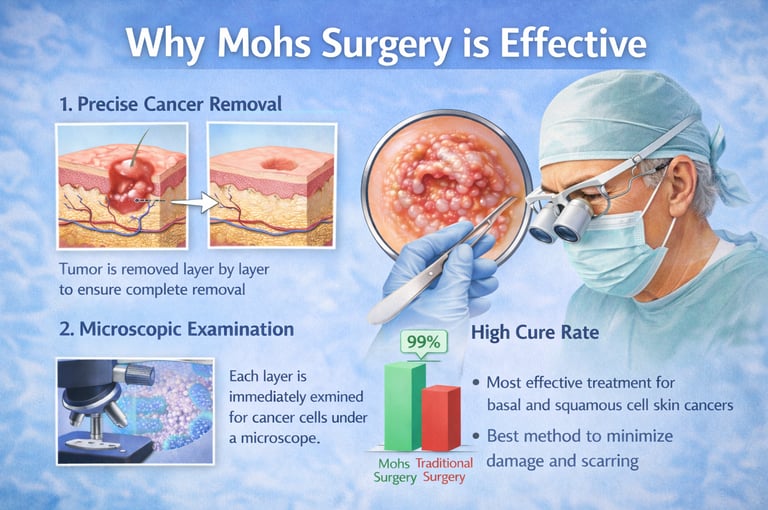
Mohs surgery is recognized for its precision and effectiveness in treating certain skin cancers. This page explains the key reasons Mohs surgery is effective, including how cancer is evaluated during the procedure and how healthy tissue is preserved.
Mohs surgery is considered an effective treatment for certain types of skin cancer because it combines precise surgical removal with immediate microscopic examination. This approach allows the Mohs surgeon to confirm that cancer cells have been fully removed during the procedure, rather than waiting for results days later.
By removing skin cancer in carefully controlled stages and examining the entire surgical margin, Mohs surgery helps balance thorough cancer treatment with preservation of healthy skin. This method is especially valuable for treating basal cell carcinoma and squamous cell carcinoma in areas where accuracy and tissue conservation are important.
The Goal of Effective Skin Cancer Treatment
The primary goal of skin cancer treatment is to remove all cancer cells while minimizing impact on the surrounding healthy skin. Achieving this balance supports long-term skin health, function, and appearance, especially in sensitive or highly visible areas.
Complete Cancer Removal
Effective treatment focuses on removing all cancerous cells to reduce the risk of the cancer returning. In Mohs surgery, each layer of tissue is examined under a microscope during the procedure, allowing the Mohs surgeon to confirm complete removal before reconstruction begins. This careful evaluation helps guide precise and thorough skin cancer removal.
Preserving Healthy Tissue
Preserving healthy tissue is an important part of effective treatment. By removing skin cancer in thin, targeted layers, Mohs surgery limits unnecessary removal of normal skin. Tissue preservation can support better wound healing, reconstruction, and overall outcomes following dermatologic surgery.
Complete Margin Examination
One of the key reasons Mohs surgery is so effective is its ability to examine the entire edge of the removed tissue. This thorough approach allows for accurate identification of any remaining cancer cells and helps guide precise skin cancer removal.
Examining 100% of the Surgical Margins
In Mohs surgery, the Mohs surgeon examines 100 percent of the surgical margins under a microscope. This means that all edges and the undersurface of the removed tissue are evaluated for cancer cells. By reviewing the complete margin, even small or irregular extensions of basal cell carcinoma or squamous cell carcinoma can be identified and addressed during the procedure.
Why Traditional Methods Examine Less Tissue
Traditional surgical excision typically involves removing the skin cancer with a predetermined margin of surrounding tissue. The specimen is then sent to an outside laboratory, where only selected sections of the margin are examined. While this approach is effective in many cases, it evaluates less tissue overall compared to Mohs surgery and does not provide real-time confirmation of complete cancer removal.
Layer-by-Layer Precision
Mohs surgery uses a controlled, step-by-step approach that allows treatment to be guided by what is seen under the microscope. This method supports accurate skin cancer removal while minimizing impact on surrounding tissue.
Targeting Only Cancerous Tissue
During Mohs surgery, tissue is removed in thin layers and examined immediately. If cancer cells are found, their exact location is identified, allowing the Mohs surgeon to remove additional tissue only where cancer remains. This targeted approach is especially helpful for basal cell carcinoma and squamous cell carcinoma with irregular or unpredictable growth patterns.
Avoiding Unnecessary Removal of Healthy Skin
Because tissue removal stops once clear margins are confirmed, Mohs surgery helps avoid removing more healthy skin than necessary. Preserving normal tissue can support better wound healing and reconstruction, particularly in areas where appearance or function is important.
Real-Time Microscopic Analysis
A defining feature of Mohs surgery is the ability to analyze tissue during the procedure rather than days later. Real-time microscopic analysis allows treatment decisions to be made based on immediate findings.
Immediate Tissue Processing
After each layer of tissue is removed, it is processed in an on-site laboratory. The tissue is carefully prepared so the Mohs surgeon can examine it under a microscope the same day. This immediate processing allows for detailed evaluation of the surgical margins and guides the next steps in treatment.
Same-Day Cancer Clearance
Because tissue is examined during the procedure, Mohs surgery can confirm whether cancer removal is complete before reconstruction begins. When clear margins are identified, patients know that the cancer has been fully addressed that day. This same-day confirmation helps reduce uncertainty and allows care to move forward efficiently.
High Accuracy in Complex Cases
Some skin cancers are more challenging to treat due to their growth patterns, location, or history. Mohs surgery is especially effective in these complex situations because it allows for precise tracking and removal of cancer cells.
Ill-Defined or Aggressive Tumors
Certain skin cancers have borders that are difficult to see or grow in irregular patterns beneath the skin. Aggressive forms of basal cell carcinoma or squamous cell carcinoma may extend beyond what is visible on the surface. Mohs surgery allows the Mohs surgeon to identify and remove these hidden extensions through detailed microscopic examination, improving accuracy in treatment.
Recurrent Skin Cancers
When a skin cancer returns after prior treatment, scar tissue can make it harder to determine where cancer cells remain. Mohs surgery is well suited for recurrent skin cancers because it provides complete margin control and precise mapping of cancerous tissue. This approach helps guide effective skin cancer removal in areas where previous treatment has occurred.
High Accuracy in Complex Cases
Some skin cancers are more challenging to treat due to their growth patterns, location, or history. Mohs surgery is especially effective in these complex situations because it allows for precise tracking and removal of cancer cells.
Ill-Defined or Aggressive Tumors
Certain skin cancers have borders that are difficult to see or grow in irregular patterns beneath the skin. Aggressive forms of basal cell carcinoma or squamous cell carcinoma may extend beyond what is visible on the surface. Mohs surgery allows the Mohs surgeon to identify and remove these hidden extensions through detailed microscopic examination, improving accuracy in treatment.
Recurrent Skin Cancers
When a skin cancer returns after prior treatment, scar tissue can make it harder to determine where cancer cells remain. Mohs surgery is well suited for recurrent skin cancers because it provides complete margin control and precise mapping of cancerous tissue. This approach helps guide effective skin cancer removal in areas where previous treatment has occurred.
Effectiveness in Sensitive & High-Risk Areas
Mohs surgery is often recommended for skin cancers located in areas where precision is especially important. In these regions, preserving healthy tissue can help protect both appearance and function while ensuring complete cancer removal.
Face, Ears, Nose, Lips & Eyelids
Skin cancers on the face and nearby structures require a careful approach due to their visibility and complex anatomy. Mohs surgery allows for targeted skin cancer removal while minimizing impact on surrounding features. This precision is particularly valuable for areas such as the ears, nose, lips, and eyelids, where even small amounts of tissue loss can affect appearance or function.
Functionally Important Areas
Mohs surgery is also effective for skin cancers located on areas that play an important role in daily activities, such as the hands, fingers, feet, and genital region. Preserving healthy tissue in these locations helps maintain movement, sensation, and overall function. The step-by-step nature of Mohs surgery supports accurate treatment in these high-risk areas.
Role of Mohs Surgeon Training & Expertise
The effectiveness of Mohs surgery is closely tied to the specialized training and experience of the Mohs surgeon. This advanced expertise supports accurate diagnosis, precise surgical technique, and careful interpretation of microscopic findings throughout the procedure.
Fellowship-Trained Mohs Surgeons
Mohs surgery is performed by dermatologists who have completed dedicated fellowship training in Mohs micrographic surgery and dermatologic oncology. This training includes extensive experience in skin cancer diagnosis, surgical removal, pathology interpretation, and reconstruction. Fellowship training helps ensure that Mohs surgery is performed according to established medical standards.
Surgeon as Both Pathologist and Surgeon
In Mohs surgery, the same physician removes the tissue and examines it under the microscope. This dual role allows the Mohs surgeon to directly correlate what is seen on the skin with what appears in the tissue samples. Having one specialist manage both the surgical and pathological aspects of care supports accuracy and efficiency during skin cancer removal.
Effectiveness Over the Long Term
The benefits of Mohs surgery extend beyond the day of treatment. Its precise approach supports long-term skin health by addressing cancer thoroughly and guiding appropriate follow-up care.
Reduced Risk of Recurrence
By examining the entire surgical margin during the procedure, Mohs surgery helps confirm that all cancer cells have been removed before reconstruction begins. This comprehensive margin control is associated with a lower risk of the skin cancer returning in the treated area compared with some other treatment methods. While recurrence can never be completely eliminated, this level of precision supports durable treatment outcomes.
Importance of Follow-Up Care
Follow-up care plays an important role in long-term effectiveness after Mohs surgery. Regular skin examinations help monitor the treated area and detect any new or recurrent skin cancers early. Ongoing dermatologic care supports overall skin health and allows concerns to be addressed promptly.
Frequently Asked Questions About Why Mohs Surgery Is Effective
Common Effectiveness-Related Questions
Why does Mohs surgery have higher cure rates than some other treatments?
Mohs surgery allows the surgeon to examine 100 percent of the surgical margins during the procedure. This thorough, real-time evaluation helps ensure that all cancer cells are removed before reconstruction begins.
Does Mohs surgery work for all skin cancers?
Mohs surgery is most commonly used for basal cell carcinoma and squamous cell carcinoma. It is recommended in specific situations based on the cancer’s type, location, size, and behavior.
Is Mohs surgery more effective for facial skin cancers?
Mohs surgery is often recommended for facial skin cancers because it offers precise removal while preserving healthy tissue. This is especially important in visible and anatomically complex areas.
Does Mohs surgery guarantee the cancer won’t return?
No treatment can guarantee that a skin cancer will never return. However, Mohs surgery is associated with a lower risk of recurrence in many cases due to its complete margin examination.
Is long-term follow-up still necessary after Mohs surgery?
Yes. Regular follow-up skin examinations are important even after successful treatment. Follow-up care helps monitor for recurrence and supports early detection of new skin cancers.


Request a Mohs Consultation
Copyright © 2026 | Savannah Mohs Surgery | All Rights Reserved.
Privacy Policy | Terms and Conditions | Accessibility
Monday: 8:00am - 5:00pm
Tuesday: 8:00am - 5:00pm
Wednesday: 8:00am - 5:00pm
Thursday: 8:00am - 5:00pm
Friday: 8:00am - 5:00pm
Office Hours
Learn More
Reach Out
Resources
Address
Request Consultation
Call Now
(704) 858-6585
Savannah Mohs Surgery
Serving Savannah, GA and Surrounding areas.

