
Follow-Up Care After
Mohs Surgery
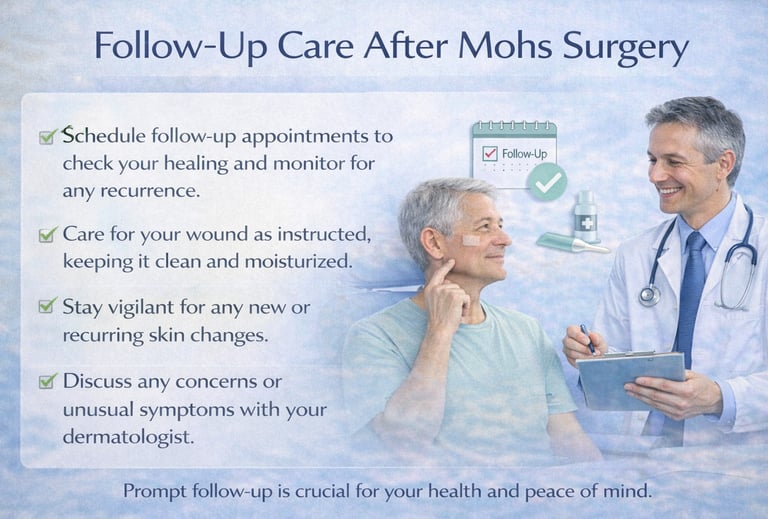
Follow-up care after Mohs surgery plays an important role in healing and long-term skin health. This page explains why follow-up visits are recommended, what is monitored after treatment, and how ongoing skin exams help detect future skin cancers early.
Follow-up care after Mohs surgery is an important part of the overall treatment process. These visits allow your care team to monitor healing, address any concerns, and support long-term skin health after skin cancer removal.
Regular follow-up also plays a key role in early detection of new or recurring skin cancers. Patients who have undergone Mohs surgery benefit from ongoing dermatologic care focused on prevention, surveillance, and education, helping them feel informed and supported throughout recovery and beyond.
Why Follow-Up Care Is Important After Mohs Surgery
Follow-up care after Mohs surgery helps ensure proper healing and supports long-term skin health. Ongoing monitoring allows dermatology providers to identify changes early and address concerns promptly.
Monitoring for Skin Cancer Recurrence
Although Mohs surgery is highly effective, continued follow-up is important to monitor the treated area over time. Follow-up visits allow the provider to examine the surgical site and surrounding skin for any signs of recurrence.
Early identification of changes at or near the treatment site helps guide timely evaluation and care when needed.
Early Detection of New Skin Cancers
Patients who have had one skin cancer are at higher risk of developing additional skin cancers in the future. Regular skin exams help detect new basal cell carcinoma, squamous cell carcinoma, or other skin cancers at an early stage.
Early detection often allows for simpler treatment options and supports better long-term outcomes while emphasizing prevention and skin awareness.
Your First Follow-Up Appointment
Your first follow-up appointment after Mohs surgery focuses on healing, comfort, and early recovery. This visit allows your dermatology care team to ensure the surgical site is progressing as expected and to answer any questions you may have.
When Your First Follow-Up Occurs
The timing of the first follow-up visit depends on the type of repair and location of the surgical site. In many cases, this appointment is scheduled within one to two weeks after surgery.
If stitches were placed, the visit may coincide with suture removal. Your care team will provide clear instructions on when to return.
What Is Evaluated During the Visit
During the follow-up appointment, the provider examines the surgical site to assess healing and look for signs of infection or delayed recovery. Any stitches may be removed if appropriate.
The visit also includes a discussion of wound care, scar management, and activity progression. Patients are encouraged to ask questions and share any concerns about their recovery.
Ongoing Skin Cancer Surveillance
Ongoing skin cancer surveillance is an essential part of care after Mohs surgery. Regular monitoring helps protect long-term skin health and supports early identification of any future concerns.
Recommended Follow-Up Schedule
Follow-up schedules are based on individual risk factors, the type of skin cancer treated, and personal medical history. Many patients are advised to have routine skin examinations every six to twelve months.
Your dermatologist will recommend a follow-up plan tailored to your situation, with adjustments made as needed over time.
Long-Term Dermatology Visits
Long-term visits with a dermatologist allow for comprehensive skin evaluations beyond the original surgical site. These visits focus on detecting new or recurring skin cancers and monitoring overall skin changes.
Regular dermatology care also provides ongoing education about sun protection, skin self-exams, and ways to reduce future skin cancer risk.
Skin Self-Examinations at Home
Regular skin self-examinations are an important part of long-term skin health after Mohs surgery. Checking your skin at home helps you become familiar with your normal skin patterns and notice changes early.
How to Perform Regular Skin Checks
Skin self-exams are typically recommended once a month. Use a full-length mirror and a hand mirror in a well-lit room to examine all areas of the body, including the scalp, back, soles of the feet, and between the toes.
Taking your time and following the same routine each month can make changes easier to spot. If needed, a family member can help check hard-to-see areas.
What Changes to Watch For
During self-exams, watch for new growths, sores that do not heal, or spots that change in size, shape, or color. Pay attention to areas that bleed easily, become crusted, or feel tender.
Changes at or near a previous surgical site should also be noted. Any concerning findings should be evaluated by a dermatology provider.
Sun Protection & Skin Cancer Prevention
Sun protection plays a key role in reducing the risk of future skin cancers, especially for individuals who have already been treated for skin cancer. Consistent sun safety habits help protect healing skin and support long-term skin health.
Sun Safety Best Practices
Limiting sun exposure during peak hours, typically between late morning and mid-afternoon, helps reduce ultraviolet (UV) exposure. Seeking shade whenever possible is another effective way to protect the skin.
Avoiding tanning beds and intentional tanning is also important, as artificial UV exposure increases skin cancer risk.
Sunscreen & Protective Clothing
Using a broad-spectrum sunscreen with an appropriate sun protection factor (SPF) helps shield the skin from both UVA and UVB rays. Sunscreen should be applied generously and reapplied as directed, especially after sweating or swimming.
Protective clothing such as wide-brimmed hats, long sleeves, and UV-blocking sunglasses provides additional defense. These measures are especially important for previously treated areas and sun-exposed skin.
Risk of Developing Future Skin Cancers
Having a history of skin cancer increases the chance of developing additional skin cancers in the future. Even after successful treatment with Mohs surgery, ongoing awareness and monitoring remain important parts of long-term skin health.
Why Prior Skin Cancer Increases Risk
Skin cancer often develops after years of cumulative sun exposure and damage to the skin. While Mohs surgery removes the identified cancer, nearby skin may still carry underlying changes that increase susceptibility to new cancers.
This is why regular follow-up visits and preventive care continue to be recommended after treatment.
Individual Risk Factors
Several factors can influence an individual’s risk of developing future skin cancers, including:
Extensive sun exposure or a history of blistering sunburns
Fair skin, light hair, or light-colored eyes
A weakened immune system
Personal or family history of skin cancer
Understanding these risk factors helps guide follow-up schedules, sun protection strategies, and long-term dermatologic care.
Coordination of Care
Care after Mohs surgery often involves collaboration among multiple healthcare providers. Clear communication helps ensure continuity of care, accurate recordkeeping, and comprehensive long-term skin health management.
Working with Your Referring Physician
Many patients are referred for Mohs surgery by their primary dermatologist or another healthcare provider. After treatment, information about the surgery, pathology results, and follow-up recommendations is typically shared with the referring physician.
This coordination helps maintain consistency in ongoing skin exams and supports seamless long-term care.
When Additional Specialists Are Involved
In some cases, additional specialists may be involved in care after Mohs surgery. This may include reconstructive surgeons or other medical providers, depending on the location and complexity of the surgical site.
When specialists are involved, communication among the care team helps ensure that treatment decisions are aligned and focused on patient safety, healing, and long-term outcomes.
When to Contact the Office Between Visits
Between scheduled follow-up appointments, it is important to remain aware of changes in your skin and surgical site. Prompt communication with the dermatology office helps address concerns early and supports ongoing skin health.
New or Concerning Skin Changes
Patients should contact the office if they notice new growths, spots that change in size, shape, or color, or sores that do not heal. Areas that bleed easily, crust repeatedly, or feel tender should also be evaluated.
Any changes near a previous surgical site are especially important to report.
Symptoms That Should Be Evaluated Promptly
Certain symptoms should be reviewed by a healthcare provider without delay, including:
Rapidly growing or painful skin lesions
Signs of infection such as increasing redness, warmth, swelling, or drainage
Persistent itching, bleeding, or discomfort in one area
Early evaluation allows concerns to be addressed quickly and appropriately.
Frequently Asked Questions About Follow-Up Care After Mohs Surgery
Common Follow-Up & Prevention Questions
How often will I need follow-up visits after Mohs surgery?
Follow-up frequency depends on your medical history, the type of skin cancer treated, and individual risk factors. Many patients are seen every six to twelve months for routine skin exams, but your dermatologist may recommend a different schedule.
Do I still need regular skin checks if the cancer was fully removed?
Yes. Even after complete cancer removal, ongoing skin exams are important because having one skin cancer increases the risk of developing others in the future.
Who will manage my long-term skin care?
Long-term care is often managed by your general dermatologist, with coordination between providers as needed. Your Mohs surgeon communicates important treatment details to support continued care.
What should I do if I notice a new spot between visits?
If you notice a new or changing spot, contact the dermatology office for guidance. Early evaluation helps determine whether further assessment is needed.
How can I reduce my risk of future skin cancers?
Consistent sun protection, regular dermatology visits, and monthly self-skin exams are key steps in reducing future risk. Your dermatologist can also provide personalized education on prevention strategies.
Request a Mohs Consultation


Copyright © 2026 | Savannah Mohs Surgery | All Rights Reserved.
Privacy Policy | Terms and Conditions | Accessibility
Monday: 8:00am - 5:00pm
Tuesday: 8:00am - 5:00pm
Wednesday: 8:00am - 5:00pm
Thursday: 8:00am - 5:00pm
Friday: 8:00am - 5:00pm
Office Hours
Learn More
Reach Out
Resources
Address
Request Consultation
Call Now
(704) 858-6585
Savannah Mohs Surgery
Serving Savannah, GA and Surrounding areas.

