
Mohs Micrographic Surgery for Skin Cancer
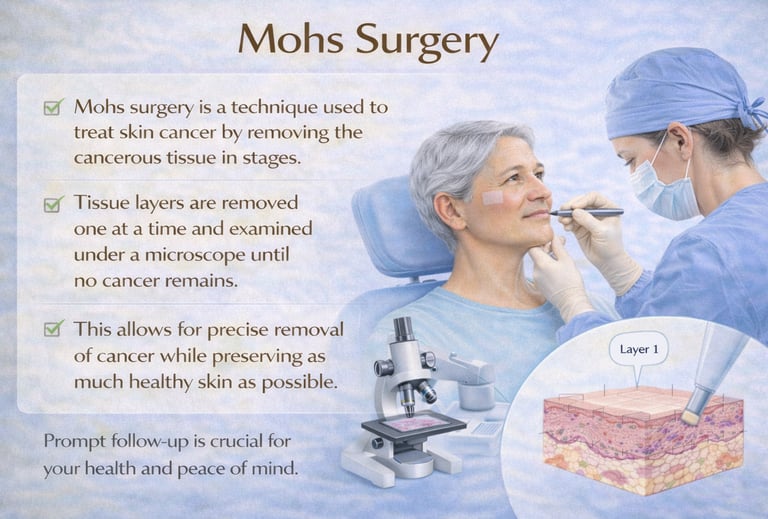
Mohs micrographic surgery is a specialized surgical technique used to treat certain types of skin cancer. It focuses on precise cancer removal while preserving as much healthy skin as possible. This page explains how Mohs micrographic surgery works and when it may be recommended.
Mohs micrographic surgery is a specialized surgical technique used to treat certain types of skin cancer. It is designed to remove cancerous tissue with a high level of precision while preserving as much healthy skin as possible. Because of its accuracy, Mohs surgery is commonly used for skin cancers located on sensitive or highly visible areas such as the face, ears, nose, and hands.
During Mohs surgery, skin cancer is removed in thin layers and examined under a microscope in real time. This process continues until all cancerous cells have been removed. By carefully examining each layer, Mohs surgery helps ensure complete cancer removal while minimizing damage to surrounding tissue. This approach supports both effective treatment and optimal healing.
Purpose of Mohs Surgery in Skin Cancer Treatment
The primary goal of Mohs surgery is to completely remove skin cancer while minimizing the removal of healthy surrounding tissue. This approach helps reduce the risk of cancer recurrence and supports better functional and cosmetic outcomes.
Mohs surgery is particularly valuable for skin cancers that:
Have irregular or poorly defined borders
Occur in cosmetically or functionally sensitive areas
Have returned after previous treatment
Are considered higher risk based on size or location
By examining tissue during the procedure, Mohs surgery allows for precise cancer removal and immediate confirmation of clear margins.
When Mohs Surgery Is Commonly Used
Mohs surgery is most often recommended for basal cell carcinoma and squamous cell carcinoma, especially when these cancers occur on the face, scalp, ears, lips, or hands. It may also be used for tumors that are large, aggressive, or have recurred after prior treatment.
In some cases, Mohs surgery may be considered for early or select melanomas, depending on clinical findings and pathology results. A dermatologist will evaluate each case individually to determine whether Mohs surgery is the most appropriate treatment option.
What Is Mohs Micrographic Surgery?
Mohs micrographic surgery is a specialized form of skin cancer treatment that removes cancerous tissue in thin, precise layers. Each layer is examined under a microscope during the procedure to determine whether cancer cells remain. This process continues until all cancerous tissue has been removed while preserving as much healthy skin as possible.
Because the cancer is examined in real time, Mohs surgery allows for a highly controlled and accurate approach to treatment.
How Mohs Surgery Differs from Other Skin Cancer Treatments
Unlike traditional excision or other skin cancer treatments, Mohs surgery involves examining 100% of the surgical margins during the procedure. With standard excision, tissue is removed and sent to a laboratory for later analysis, which may not evaluate the entire margin.
Mohs surgery differs by:
Evaluating tissue immediately
Removing cancer layer by layer
Preserving healthy surrounding skin
Reducing the likelihood of repeat procedures
This approach allows for more precise cancer removal, especially in delicate or high-risk areas.
Why Mohs Surgery Is Considered a Specialized Technique
Mohs surgery requires advanced training in both surgery and pathology. The physician performing the procedure is specially trained to remove the cancer, process the tissue, examine it under a microscope, and determine whether additional removal is needed — all during the same visit.
Because of this specialized process, Mohs surgery is typically used for skin cancers that:
Are located on the face or other sensitive areas
Have recurred after prior treatment
Have poorly defined borders
Require tissue preservation for cosmetic or functional reasons
This combination of surgical precision and immediate tissue analysis is what makes Mohs surgery a highly specialized and effective treatment option.
What Are the Benefits of Mohs Micrographic Surgery?
High Cure Rates for Skin Cancer
Mohs micrographic surgery is known for having some of the highest cure rates among skin cancer treatments. Because the cancer is examined layer by layer during the procedure, the surgeon can confirm that all cancerous cells have been removed before the surgery is completed. This careful approach helps reduce the chance of the cancer returning.
Maximum Preservation of Healthy Tissue
One of the key advantages of Mohs surgery is its ability to preserve healthy skin. Only tissue that contains cancer cells is removed, which helps minimize the amount of normal skin affected by surgery. This is especially important in areas such as the face, ears, nose, lips, and hands, where tissue conservation plays an important role in both function and appearance.
Precise Cancer Removal
Mohs surgery allows for precise removal of cancerous tissue through real-time microscopic examination. Each layer of tissue is carefully mapped and analyzed, ensuring that cancer is removed completely while avoiding unnecessary removal of healthy skin. This level of precision is not possible with standard excision techniques.
Effective for High-Risk or Sensitive Areas
Mohs surgery is often recommended for skin cancers located in areas where preservation of healthy tissue is critical or where cancers are more likely to recur. These areas commonly include the face, scalp, ears, neck, hands, and feet. It is also frequently used for tumors with poorly defined borders or those that have returned after previous treatment.
What Is the Process of Mohs Micrographic Surgery?
Mohs micrographic surgery follows a carefully structured, step-by-step process designed to remove skin cancer with precision while preserving healthy tissue. Each stage of the procedure is performed during a single visit, allowing the surgeon to confirm complete cancer removal before the surgery is finished.
Step 1: Removal of the Visible Tumor
The procedure begins with the removal of the visible portion of the skin cancer. A local anesthetic is used to numb the area, helping keep the patient comfortable throughout the process. Only a thin layer of tissue is removed at this stage.
Step 2: Layer-by-Layer Tissue Examination
After the visible tumor is removed, the tissue is carefully processed and examined under a microscope. This allows the surgeon to check for cancer cells at the edges and underneath the removed tissue.
If cancer cells are still present, additional layers are removed only from the areas where cancer remains.
Step 3: Mapping and Microscopic Analysis
Each layer of tissue is carefully mapped and analyzed to identify the exact location of any remaining cancer cells. This mapping process allows the surgeon to target only the affected areas while preserving healthy skin.
This precise approach is a key feature of Mohs surgery and helps ensure thorough cancer removal.
Step 4: Completion of Cancer Removal
The process of removing and examining tissue continues until no cancer cells are detected. Once the surgeon confirms that the area is clear, the cancer removal portion of the procedure is complete.
This step-by-step verification helps reduce the risk of recurrence and ensures that the cancer has been fully treated.
Step 5: Wound Repair and Reconstruction
After the cancer has been removed, the surgical site is evaluated for repair. Depending on the size and location of the wound, it may be allowed to heal naturally or repaired using stitches or reconstructive techniques.
The goal of reconstruction is to promote proper healing while maintaining the best possible functional and cosmetic outcome.
What Type of Skin Cancers Are Treatable with Mohs Surgery?
Mohs micrographic surgery is used to treat certain skin cancers that require precise removal and careful margin control. It is most often recommended for cancers that are located in sensitive areas, have a higher risk of recurrence, or require tissue preservation.
Basal Cell Carcinoma
Basal cell carcinoma is the most common type of skin cancer treated with Mohs surgery. Mohs is frequently used when basal cell carcinoma occurs on the face, scalp, ears, nose, or other areas where preserving healthy tissue is important.
Because basal cell carcinoma can grow with irregular borders beneath the skin, Mohs surgery allows for complete removal while minimizing damage to surrounding tissue.
Squamous Cell Carcinoma
Mohs surgery is also commonly used to treat squamous cell carcinoma, particularly when the cancer is larger, located in high-risk areas, or has returned after previous treatment.
Squamous cell carcinoma has a higher potential to grow deeper or spread if left untreated, making the precise removal offered by Mohs surgery especially beneficial in certain cases.
Recurrent or High-Risk Skin Cancers
Skin cancers that have returned after prior treatment or that display aggressive features are often treated with Mohs surgery. These cancers may have unclear borders or deeper extensions that are not easily seen on the surface.
Mohs surgery allows the surgeon to track and remove these cancers accurately, reducing the risk of recurrence while preserving surrounding healthy tissue.
Select Early-Stage Melanomas
In select cases, Mohs surgery may be used to treat certain early-stage melanomas or melanoma in situ. This decision is based on pathology findings and clinical judgment.
When appropriate, Mohs surgery allows for precise removal while carefully evaluating tissue margins. A dermatologist will determine whether this approach is suitable based on the individual case.
What Are the Self-Care Tips for Mohs Surgery Recovery?
Proper self-care after Mohs surgery helps support healing and reduces the risk of complications. Your care team will provide specific instructions based on your procedure, but the following general guidelines help patients understand what to expect during recovery.
Caring for the Surgical Site
Keeping the surgical area clean and protected is an important part of healing. Patients are typically advised to follow their provider’s instructions for bandage care and wound cleaning. This may include gentle cleansing, applying ointment as directed, and keeping the area covered for a period of time.
Avoid touching or disturbing the wound unless instructed, as this can interfere with healing or increase the risk of infection.
Managing Swelling and Discomfort
Some swelling, tenderness, or mild discomfort is normal after Mohs surgery. These symptoms often improve gradually over the first few days. Applying cold compresses, resting, and keeping the treated area elevated when possible may help reduce swelling.
Pain is usually mild and can often be managed with medications recommended by your provider. Any severe or worsening pain should be reported to your care team.
Activity Restrictions During Healing
Limiting physical activity after surgery helps prevent bleeding and supports proper healing. Patients are usually advised to avoid strenuous exercise, heavy lifting, or bending for a short period following the procedure.
Your dermatologist will let you know when it is safe to resume normal activities based on the size and location of the surgical site.
Signs to Monitor During Recovery
During the healing process, it is important to monitor the surgical area for any unusual changes. Redness, swelling, or drainage that worsens rather than improves should be evaluated.
If you notice increasing pain, bleeding that does not stop, signs of infection, or changes that concern you, contact your provider promptly for guidance.
Importance of Follow-Up Visits
Follow-up appointments allow your dermatologist to monitor healing, remove sutures if needed, and ensure the area is healing properly. These visits also provide an opportunity to check for any signs of recurrence or new skin concerns.
Ongoing follow-up care plays an important role in long-term skin health, especially for patients who have had skin cancer.
FAQ's About Mohs Micrographic Surgery
Is Mohs Surgery Painful?
Mohs surgery is typically well tolerated. A local anesthetic is used to numb the area, so patients usually feel little to no pain during the procedure. Some mild discomfort or soreness may occur afterward, but this is often manageable with simple pain relief measures recommended by your provider.
How Long Does Mohs Surgery Take?
The length of Mohs surgery varies depending on how many layers of tissue need to be removed. Each stage of the procedure includes a waiting period while the tissue is examined under a microscope. Because of this, patients should plan to spend several hours at the office, although the exact time differs from person to person.
Will There Be a Scar After Mohs Surgery?
Any surgical procedure can result in a scar, but Mohs surgery is designed to minimize scarring by preserving as much healthy tissue as possible. The appearance of a scar depends on factors such as the size and location of the cancer and how the area heals. Over time, most scars improve and become less noticeable.
When Can I Resume Normal Activities?
Activity restrictions vary depending on the location and size of the surgical site. Many patients are advised to avoid strenuous activity for a short period after surgery to reduce the risk of bleeding and support proper healing. Your provider will give you specific guidance based on your individual case.
How Successful Is Mohs Surgery?
Mohs surgery is known for its high success rates, particularly for basal cell and squamous cell carcinomas. Its step-by-step tissue examination allows for precise cancer removal while preserving healthy skin. Your dermatologist can discuss expected outcomes based on your specific diagnosis.
About Mohs Micrographic Surgery
Request a Mohs Consultation


Copyright © 2026 | Savannah Mohs Surgery | All Rights Reserved.
Privacy Policy | Terms and Conditions | Accessibility
Monday: 8:00am - 5:00pm
Tuesday: 8:00am - 5:00pm
Wednesday: 8:00am - 5:00pm
Thursday: 8:00am - 5:00pm
Friday: 8:00am - 5:00pm
Office Hours
Learn More
Reach Out
Resources
Address
Request Consultation
Call Now
(704) 858-6585
Savannah Mohs Surgery
Serving Savannah, GA and Surrounding areas.

