
Squamous Cell Carcinoma Skin Cancer
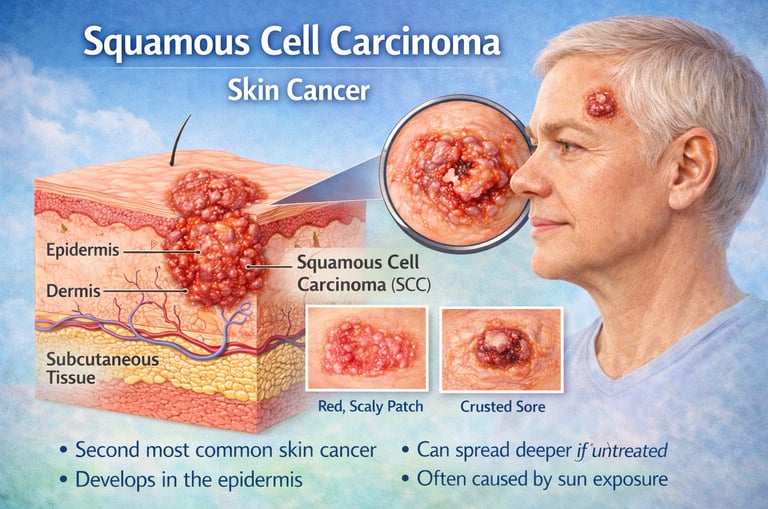
Squamous cell carcinoma is a common form of skin cancer that develops in the outer layers of the skin. This page explains what squamous cell carcinoma is, how it is diagnosed, and the treatment options that may be recommended, including when Mohs surgery is considered.
Squamous cell carcinoma is a common type of skin cancer that develops in the squamous cells, which make up much of the skin’s outer layer. It most often appears on areas of the body that receive regular sun exposure, such as the face, scalp, ears, neck, and hands. Compared to some other skin cancers, squamous cell carcinoma can grow more quickly and may become more serious if not treated.
Understanding squamous cell carcinoma, including how it develops and how it is treated, can help patients feel more informed and confident after a diagnosis. Early evaluation and appropriate care play an important role in preventing complications and supporting long-term skin health.
What Is Squamous Cell Carcinoma?
Squamous cell carcinoma is a type of skin cancer that begins in the squamous cells, which are flat cells located in the outer layer of the skin. These cells help protect the body from environmental damage. When squamous cells become damaged, they can begin to grow abnormally and form cancer.
Squamous cell carcinoma can behave more aggressively than basal cell carcinoma and may spread if not treated. Early diagnosis and appropriate treatment help reduce the risk of complications.
Overview of Squamous Cell Carcinoma
Squamous cell carcinoma is one of the most common forms of skin cancer. It typically develops on sun-exposed areas such as the face, ears, scalp, neck, arms, and hands. In some cases, it may also appear on areas of damaged or scarred skin.
While many squamous cell carcinomas are treatable, some can grow deeper into the skin or spread to nearby tissues. This is why timely evaluation and proper treatment are important.
How Squamous Cell Carcinoma Develops
Squamous cell carcinoma develops when DNA damage occurs in squamous cells, most often due to long-term exposure to ultraviolet (UV) radiation. Over time, this damage can interfere with normal cell growth and repair, leading to uncontrolled cell division.
Repeated sun exposure, sunburns, and cumulative UV damage increase the risk. These changes often happen gradually, which is why squamous cell carcinoma may develop years after the initial skin damage.
What Are the Symptoms of Squamous Cell Carcinoma?
Squamous cell carcinoma can appear in different ways and may change gradually over time. Some symptoms are easy to recognize, while others may seem minor at first. Paying attention to persistent or changing skin lesions is important for early detection.
Common Signs and Skin Changes
Squamous cell carcinoma often appears as a firm, raised bump or a rough, scaly patch on the skin. These areas may be red, pink, or flesh-colored and can develop a crusted or thickened surface.
Other common signs include:
A sore that does not heal
A patch of skin that bleeds or crusts repeatedly
A growth with a hardened or wart-like texture
These changes most often occur on sun-exposed areas such as the face, ears, scalp, neck, hands, and arms.
Symptoms That May Worsen Over Time
As squamous cell carcinoma grows, symptoms may become more noticeable. The lesion may increase in size, become tender, or bleed more easily. In some cases, the area may feel sore, itchy, or painful.
Without treatment, squamous cell carcinoma can grow deeper into the skin and surrounding tissue. This is why changes that persist or worsen over time should not be ignored.
When Symptoms Should Be Evaluated
Any skin lesion that does not heal within several weeks, continues to grow, or changes in appearance should be evaluated by a dermatologist. Bleeding, pain, or rapid growth are also signs that warrant prompt attention.
Early evaluation allows for accurate diagnosis and timely treatment. Addressing symptoms early helps reduce the risk of complications and supports better long-term outcomes.
What Are the Causes of Squamous Cell Carcinoma?
Squamous cell carcinoma develops when skin cells are damaged over time. Several factors can increase the risk, and these causes often work together rather than acting alone. Understanding these contributing factors helps patients better understand their diagnosis and the importance of ongoing skin care.
Sun Exposure and UV Damage
Long-term exposure to ultraviolet (UV) radiation is the most common cause of squamous cell carcinoma. UV rays from the sun damage the DNA in skin cells, which can lead to abnormal cell growth over time.
This damage often accumulates gradually through years of sun exposure, especially on areas such as the face, scalp, ears, neck, arms, and hands. Severe or repeated sunburns increase the risk, particularly when they occur earlier in life.
Chronic Skin Injury and Irritation
Squamous cell carcinoma can also develop in areas of skin that have been chronically injured or irritated. This may include scars, non-healing wounds, burns, or areas of long-standing inflammation.
Over time, repeated injury can interfere with normal skin repair and increase the risk of abnormal cell growth. These areas should be monitored closely, especially if changes occur.
Personal Risk Factors and Medical History
Certain personal factors can increase the risk of squamous cell carcinoma. These include fair skin, a history of frequent sun exposure, and older age, as sun damage accumulates over time.
A weakened immune system, prior radiation treatment, or a personal history of skin cancer may also increase risk. Your dermatologist considers these factors when evaluating skin changes and recommending follow-up care.
How Is Squamous Cell Carcinoma Diagnosed?
Diagnosing squamous cell carcinoma involves a careful evaluation of the skin and, when needed, confirmation through laboratory testing. An accurate diagnosis helps guide appropriate treatment and determine whether additional care or monitoring is needed.
Clinical Skin Examination
The diagnostic process often begins with a thorough skin examination. During this exam, the dermatologist evaluates the size, shape, color, and texture of the suspicious area, as well as the surrounding skin.
Your provider may also examine other areas of the body to check for additional lesions. This examination helps determine whether further testing is needed.
Skin Biopsy and Pathology Review
If squamous cell carcinoma is suspected, a skin biopsy is performed. During a biopsy, a small sample of the lesion is removed and sent to a laboratory for examination under a microscope.
A pathologist reviews the tissue to confirm the diagnosis and assess important features of the cancer. This information is essential for planning the most appropriate treatment.
Assessing Risk and Tumor Features
Once squamous cell carcinoma is confirmed, the dermatologist evaluates features that help determine risk. These may include the size of the tumor, how deep it extends, its location, and whether it shows aggressive characteristics.
Cancers with higher-risk features may require more specialized treatment and closer follow-up. This assessment allows your care team to tailor treatment and monitoring to your individual needs.
How Is Squamous Cell Carcinoma Treated?
Treatment for squamous cell carcinoma is chosen based on several factors, including the size and location of the tumor, how deeply it has grown, and whether it shows higher-risk features. The goal of treatment is to remove the cancer completely while protecting surrounding healthy skin and reducing the risk of recurrence.
Your dermatologist will explain the recommended treatment approach and answer any questions before moving forward.
Treatment Options for Squamous Cell Carcinoma
Several treatment options may be used to treat squamous cell carcinoma. These can include surgical removal of the cancer, as well as other treatments depending on the characteristics of the tumor.
The choice of treatment depends on individual factors such as tumor location, size, and prior treatment history. Your provider will recommend the option that offers the best balance of effectiveness and safety for your specific case.
When Mohs Surgery Is Recommended
Mohs surgery may be recommended for squamous cell carcinomas that are located in sensitive or high-risk areas, such as the face, ears, lips, scalp, hands, or feet. It is also commonly used for tumors with unclear borders, larger size, aggressive features, or those that have returned after previous treatment.
Mohs surgery allows for precise, layer-by-layer removal of cancer while examining the tissue during the procedure. This approach helps ensure complete cancer removal while preserving as much healthy skin as possible.
Follow-Up Care After Treatment
Follow-up care is an important part of treatment after squamous cell carcinoma. Regular dermatology visits allow your provider to monitor the treated area, check for recurrence, and examine the skin for new concerns.
Patients who have had squamous cell carcinoma are at increased risk of developing additional skin cancers. Ongoing follow-up care, combined with sun protection and regular skin checks, helps support long-term skin health.
Frequently Asked Questions About Squamous Cell Carcinoma
A diagnosis of squamous cell carcinoma often raises important questions about seriousness, treatment, and long-term care. The answers below address common concerns patients have after diagnosis.
Is Squamous Cell Carcinoma More Serious Than Basal Cell Carcinoma?
Squamous cell carcinoma is generally considered more aggressive than basal cell carcinoma. While both are common and treatable when detected early, squamous cell carcinoma has a higher chance of growing deeper into the skin or spreading if not treated promptly.
Early diagnosis and appropriate treatment greatly reduce the risk of complications and support positive outcomes.
Can Squamous Cell Carcinoma Spread?
Squamous cell carcinoma can spread in some cases, particularly when the tumor is larger, deeper, or located in high-risk areas such as the lips, ears, or scalp. Tumors with aggressive features or those left untreated for longer periods carry a higher risk.
This is why timely evaluation and treatment are important. When detected early, squamous cell carcinoma is often treated successfully.
Can Squamous Cell Carcinoma Return After Treatment?
Squamous cell carcinoma can return after treatment, especially in individuals who have had skin cancer before. Even after successful removal, new squamous cell carcinomas may develop in other areas of the skin.
Regular follow-up visits and ongoing skin monitoring help detect recurrence or new skin cancers early, when treatment is often simpler.
When Should I See a Dermatologist?
You should see a dermatologist if you notice a new skin growth, a sore that does not heal, or changes in an existing lesion. Areas that bleed, crust, or grow over time should also be evaluated.
If you have a history of squamous cell carcinoma or other skin cancers, routine dermatology visits are especially important. Early evaluation supports timely care and long-term skin health.


Request a Mohs Consultation
Copyright © 2026 | Savannah Mohs Surgery | All Rights Reserved.
Privacy Policy | Terms and Conditions | Accessibility
Monday: 8:00am - 5:00pm
Tuesday: 8:00am - 5:00pm
Wednesday: 8:00am - 5:00pm
Thursday: 8:00am - 5:00pm
Friday: 8:00am - 5:00pm
Office Hours
Learn More
Reach Out
Resources
Address
Request Consultation
Call Now
(704) 858-6585
Savannah Mohs Surgery
Serving Savannah, GA and Surrounding areas.

