
What Is Mohs Micrographic Surgery
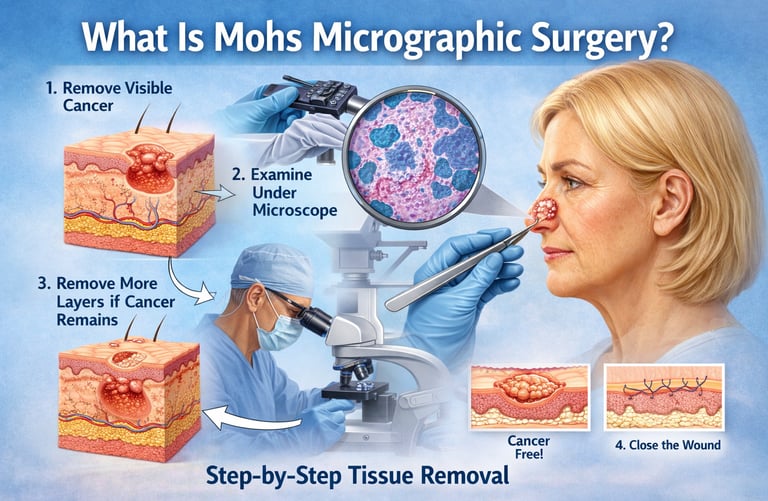
Mohs surgery is a specialized surgical technique used to treat certain types of skin cancer. This page explains what Mohs surgery is, how it works, and why it may be recommended for precise cancer removal while preserving healthy skin.
Mohs surgery is a specialized form of dermatologic surgery used to treat certain types of skin cancer. It is designed to remove cancerous tissue layer by layer while examining each layer under a microscope. This careful approach allows the Mohs surgeon to confirm complete skin cancer removal during the procedure.
Mohs surgery is most commonly used to treat basal cell carcinoma and squamous cell carcinoma, particularly in areas where preserving healthy skin is important. By combining precise surgical removal with immediate microscopic analysis, Mohs surgery helps balance effective cancer treatment with thoughtful tissue preservation.
Definition of Mohs Micrographic Surgery
Mohs micrographic surgery is a precise surgical technique used for the removal of certain skin cancers. The procedure involves removing thin layers of cancerous tissue and examining them under a microscope in real time. This process continues until no cancer cells remain, allowing for complete skin cancer removal while preserving as much healthy tissue as possible.
What “Mohs” Means
The term “Mohs” comes from the name of the physician who developed the technique. It does not describe a type of cancer, but rather a specialized surgical method. Today, Mohs surgery refers to this highly structured, microscope-guided approach performed by specially trained dermatologic surgeons.
How Mohs Surgery Was Developed
Mohs surgery was developed in the 1930s by Dr. Frederic E. Mohs, a physician and researcher. Over time, the technique was refined to improve accuracy, safety, and patient comfort. Modern Mohs surgery uses local anesthesia and on-site tissue analysis, making it a widely accepted and trusted method for treating certain basal cell carcinoma and squamous cell carcinoma cases.
How Mohs Surgery Works
Mohs surgery follows a structured process that combines surgical precision with immediate microscopic analysis. This approach allows skin cancer to be removed in stages, with each step guided by what is seen under the microscope rather than by visual inspection alone.
Layer-by-Layer Cancer Removal
During Mohs surgery, the Mohs surgeon removes a thin layer of tissue from the area affected by skin cancer. Unlike standard excisions that remove a predetermined margin, Mohs surgery removes tissue gradually and only as needed. This layer-by-layer method helps ensure complete skin cancer removal while preserving surrounding healthy skin.
Real-Time Microscopic Examination
After each layer is removed, the tissue is processed and examined under a microscope in an on-site laboratory. The Mohs surgeon evaluates the entire surgical margin to check for remaining cancer cells. If cancer is detected, its exact location is identified, allowing the next layer of tissue to be removed precisely from the affected area only.
What Makes Mohs Surgery Different
Mohs surgery differs from other skin cancer treatments because it combines surgical removal with immediate, detailed examination of the tissue. This integrated approach allows for a high level of accuracy during skin cancer removal and helps guide treatment decisions in real time.
Complete Margin Control
One of the defining features of Mohs surgery is complete margin control. The Mohs surgeon examines 100 percent of the surgical margin under the microscope, rather than sampling selected areas. This thorough evaluation helps identify even small clusters of remaining cancer cells and supports confirmation of complete removal before reconstruction begins.
Tissue Preservation
By removing skin cancer in thin layers and stopping once clear margins are achieved, Mohs surgery preserves as much healthy tissue as possible. This is especially important in areas such as the face, ears, and hands, where conserving normal skin can support better functional and cosmetic outcomes after dermatologic surgery.
Types of Skin Cancer Treated with Mohs Surgery
Mohs surgery is most commonly used to treat certain nonmelanoma skin cancers. It is selected when precise skin cancer removal and preservation of healthy tissue are especially important due to the cancer’s location, size, or behavior.
Basal Cell Carcinoma
Basal cell carcinoma is the most common type of skin cancer and is frequently treated with Mohs surgery. This approach is often recommended when the cancer is located on the face, ears, scalp, or other sensitive areas, or when the tumor has returned after previous treatment. Mohs surgery allows for thorough removal while minimizing the impact on surrounding healthy skin.
Squamous Cell Carcinoma
Squamous cell carcinoma can be more aggressive than basal cell carcinoma and may have a higher risk of spreading if left untreated. Mohs surgery is commonly used for squamous cell carcinoma with higher-risk features, such as tumors with poorly defined borders or those in high-risk locations. The step-by-step process helps ensure complete removal while protecting nearby tissue.
Why Mohs Surgery Is So Effective
Mohs surgery is widely used because it combines careful surgical technique with immediate microscopic analysis. This approach supports accurate skin cancer removal while minimizing unnecessary damage to healthy tissue.
Highest Cure Rates
Mohs surgery is associated with very high cure rates for many basal cell carcinoma and squamous cell carcinoma cases, particularly for cancers that are high risk or have returned after prior treatment. By examining the entire surgical margin during the procedure, the Mohs surgeon can confirm complete cancer removal before reconstruction begins. While outcomes vary by individual case, this level of precision is a key reason Mohs surgery is often recommended.
Precision in Sensitive Areas
Mohs surgery is especially valuable in areas where preserving healthy skin is important, such as the face, ears, nose, lips, hands, and feet. The layer-by-layer approach allows the Mohs surgeon to remove only tissue affected by cancer, helping protect surrounding structures. This precision supports both functional preservation and thoughtful cosmetic repair following dermatologic surgery.
When Mohs Surgery Is Recommended
Mohs surgery is not necessary for every skin cancer. It is recommended in specific situations where careful margin control and tissue preservation are especially important. The decision to use Mohs surgery is based on well-established dermatologic guidelines and the individual characteristics of the skin cancer.
High-Risk Tumors
Mohs surgery is often recommended for skin cancers with features that increase the risk of recurrence or deeper spread. These may include tumors with aggressive growth patterns, poorly defined borders, or larger size. High-risk basal cell carcinoma and squamous cell carcinoma may benefit from the precise, staged approach used in Mohs surgery.
Recurrent Skin Cancers
When a skin cancer returns after previous treatment, its growth pattern can be more unpredictable. Mohs surgery allows the Mohs surgeon to carefully track and remove residual cancer cells that may extend beyond the original site. This makes Mohs surgery a commonly used option for recurrent skin cancers.
Cancers in Cosmetic or Functional Areas
Skin cancers located in areas where appearance or function is important often require a more precise approach. Mohs surgery is frequently recommended for cancers on the face, ears, scalp, hands, feet, and other sensitive regions. Preserving healthy tissue in these areas can support better cosmetic and functional outcomes after skin cancer removal.
What to Expect with Mohs Surgery
Knowing what to expect can help reduce anxiety before treatment. Mohs surgery is typically performed as an outpatient procedure in a specialized dermatology office, with a focus on patient comfort and careful, step-by-step care.
Same-Day Procedure
Mohs surgery is usually completed in a single day, although the length of time varies depending on how many stages are required. Patients should plan to spend several hours at the office, including waiting periods while tissue is examined in the on-site lab. Most patients are able to go home the same day after the procedure is finished.
Local Anesthesia
The procedure is performed using local anesthesia to numb the treatment area. This allows patients to remain awake while staying comfortable throughout the surgery. General anesthesia is not typically needed, and most people tolerate Mohs surgery well with minimal discomfort.
Safety & Expertise in Mohs Surgery
Mohs surgery is performed using established medical standards designed to prioritize patient safety and accuracy. The procedure relies on specialized training and a carefully controlled clinical setting to support precise skin cancer removal.
Fellowship-Trained Mohs Surgeons
Mohs surgery is performed by physicians who have completed advanced fellowship training in Mohs micrographic surgery and dermatologic oncology. This training includes expertise in skin cancer diagnosis, surgical removal, and reconstruction. Fellowship-trained Mohs surgeons are equipped to manage complex cases while focusing on both medical effectiveness and patient care.
In-Office Pathology
A key component of Mohs surgery is the use of an on-site pathology laboratory. This allows the Mohs surgeon to process and examine tissue during the procedure rather than sending it to an outside lab. In-office pathology enables real-time decision-making, supports complete margin evaluation, and helps ensure accurate and efficient skin cancer removal.
Benefits of Mohs Surgery for Patients
Mohs surgery offers several important benefits for patients when it is used in appropriate clinical situations. Its structured, microscope-guided approach supports effective treatment while prioritizing preservation of healthy skin.
Maximal Tissue Preservation
Mohs surgery removes skin cancer in thin layers and stops once clear margins are achieved. This allows the Mohs surgeon to preserve as much healthy tissue as possible, which is especially important in visible or functionally sensitive areas. Preserving normal skin can support better wound healing and reconstruction after dermatologic surgery.
Lower Risk of Recurrence
By examining the entire surgical margin during the procedure, Mohs surgery helps confirm that all cancer cells have been removed before the wound is repaired. This thorough approach is associated with a lower risk of the skin cancer returning in the treated area compared with some other treatment methods. While no procedure can eliminate all risk, this level of precision is a key advantage of Mohs surgery.
Frequently Asked Questions About Mohs Surgery
Common Mohs Surgery Questions
Is Mohs surgery painful?
Mohs surgery is performed using local anesthesia, which numbs the treatment area. Most patients feel little to no pain during the procedure, though mild soreness can occur afterward as the area heals.
How long does it take to heal after Mohs surgery?
Healing time varies depending on the size and location of the surgical site and the type of repair performed. Many areas heal over several weeks, with continued improvement in appearance over time.
Will I have a scar?
Any surgical procedure can result in a scar. Mohs surgery is designed to preserve as much healthy tissue as possible, which can help minimize scarring. Your Mohs surgeon will choose a repair method aimed at supporting optimal healing.
Can Mohs surgery treat melanoma?
Mohs surgery is most commonly used for basal cell carcinoma and squamous cell carcinoma. In select cases, specialized forms of Mohs surgery may be used for certain melanomas, depending on clinical factors.
Is Mohs surgery done in a hospital?
Mohs surgery is typically performed in an outpatient dermatology office equipped with an on-site laboratory. Most patients go home the same day after the procedure.


Request a Mohs Consultation
Copyright © 2026 | Savannah Mohs Surgery | All Rights Reserved.
Privacy Policy | Terms and Conditions | Accessibility
Monday: 8:00am - 5:00pm
Tuesday: 8:00am - 5:00pm
Wednesday: 8:00am - 5:00pm
Thursday: 8:00am - 5:00pm
Friday: 8:00am - 5:00pm
Office Hours
Learn More
Reach Out
Resources
Address
Request Consultation
Call Now
(704) 858-6585
Savannah Mohs Surgery
Serving Savannah, GA and Surrounding areas.

